Get Full Government Meeting Transcripts, Videos, & Alerts Forever!
Get email alerts on the Land Use Rezoning Midwest Young Artists topic
No spam. Unsubscribe anytime.
Highwood council hears hours of public comment on proposed Midwest Young Artists venue at Fort Sheridan
Summary
The Highwood City Council on July 15 heard more than three hours of public comment on a petition to rezone a four‑acre parcel in Fort Sheridan from R‑1 to a planned unit development (PUD) to allow a 728‑seat Midwest Young Artist Conservatory performance hall; the Planning and Zoning Commission had recommended denial 8–1.
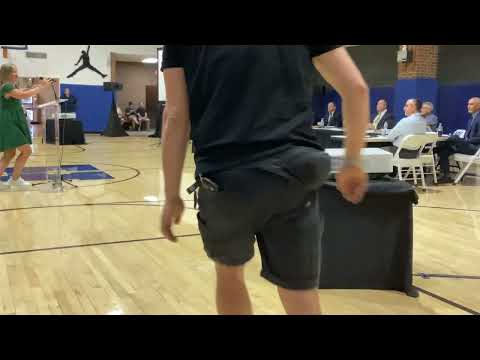
The Highwood City Council on July 15 heard more than three hours of public comment on a petition to rezone a four‑acre parcel in Fort Sheridan from R‑1 (residential) to a planned unit development (PUD) to allow construction of a 728‑seat performance hall and related campus proposed by Midwest Young Artist Conservatory (referred to in filings and testimony as MYAC/NYAC). The council opened the public comment period after staff introduced agenda item 11.2, “consideration of an ordinance regarding a special use permit for planned unit development, rezoning property from an R‑1 to a PUD, and approval of the preliminary plan.”
Why it matters: rezoning would change land currently designated residential in the Fort Sheridan historic neighborhood to allow a large, single‑purpose cultural facility that the petitioner says would host roughly 18 full‑capacity or near‑capacity events a year. Opponents say the change would bring traffic, stormwater and emergency‑response risks, permanent loss of taxable residential land and harms to the historic character of Fort Sheridan; supporters said the venue would expand music education, cultural programming and regional reputation.
Speakers at the council meeting included long‑time Fort Sheridan residents, two homeowners’ association representatives, local professionals and NYAC alumni and parents. David Henderson, president of the Town of Fort Sheridan Master Homeowners Association, told the council that existing retention ponds and ravines already suffer from siltation and past erosion and that “the current MYAC plan with the stormwater runoff from the proposed development will of course absolutely increase flows into the Town of Fort Sheridan retention pond,” a change he said the pond system was not designed to handle. Margaret Wicker Cook and other residents showed videos and described ponds rising multiple feet during recent storms.
Many opponents emphasized public safety and traffic. Jason Casales read a submitted statement for the Westover Townhomes ownership noting that Westover Road could be “dead‑ended” under the proposal, removing a direct northern exit and increasing travel times for residents. Several speakers cited emergency‑response concerns: “Adding a large scale music venue within a residential community will increase first responder response time,” said Barbie Oliph, a nurse with emergency preparedness experience. Multiple commenters said narrow, two‑lane local streets and the nearby Metra crossing would be overwhelmed by event traffic.
Local attorneys and zoning experts also addressed legal and procedural questions. John Mellon, who identified himself as an attorney, said the Highwood City Code limits PUD eligibility and read Section 11‑10‑2, arguing that R‑1 is explicitly excluded from PUD qualification. He told the council the proposal “fails a staggering 135 spaces short of the parking minimum” under the code and said the petition relied on a parking management plan in place of the code’s fixed parking requirement.
Speakers also questioned the project’s fiscal case and operational assumptions. Kay Reichenbach, who said she has a background in corporate finance and accounting, compared the projected tax revenue from eight single‑family homes on the four‑acre parcel (which she estimated could yield more than $270,000 annually in property taxes) with the likely tax‑exempt status of a nonprofit venue and wrote that the applicant’s projected entertainment tax receipts would be modest. Dale Blitz, citing MYAC’s publicly filed Form 990, said the conservatory’s revenues have shown little growth over the past decade and argued the nonprofit’s financial trends raise fundraising and operating risks for a $35–$40 million project.
Opponents repeatedly noted the Planning and Zoning Commission’s recommendation. Janet Buckley and several others reminded council members that the commission voted 8–1 to deny the petition after nearly 11 hours of testimony and said council should uphold that recommendation. Residents reported petition signatures numbering “more than 700” and urged the council to preserve residential zoning and the Fort Sheridan historic character.
Supporters of the proposal also addressed council. Omri Almorani, owner of the Robert Almorani studio and a commercial art and music producer, told the council he had worked on venues worldwide and called the proposed hall “wonderful for the city of Highwood” and for future generations of students. Colleen Briggs, a Midwest Young Artist alum and professional clarinetist, said acoustic concert halls are built for unamplified chamber and orchestral music and argued that “claims of noise pollution or disruptive crowds reflect a misunderstanding of both the space and the purpose.” Other parents and alumni described educational and cultural benefits and said MYAC provides regional youth access to classical‑music instruction.
Several commenters criticized the applicant’s community outreach and transparency. Desmond Raffrey and other neighbors said MYAC did not meaningfully engage most directly impacted neighbors until recently and that commitments from MYAC’s leadership were described as “non‑negotiable.” Karen Hoffman and others questioned the applicability and provenance of economic estimates presented by the applicant, noting that some claims relied on an Americans for the Arts (AFTA) spreadsheet that AFTA itself says should not substitute for a venue‑specific economic study.
What council did and did not decide: during the transcripted portion of the meeting the council accepted extensive public comment; there was no final council vote on the rezoning or PUD application recorded in the provided transcript. The Planning and Zoning Commission record, the applicants’ materials and dozens of written comments were part of the meeting packet, council staff said, and the council acknowledged those materials were available for review.
Context and next steps: speakers on both sides urged the council to consider not just the benefits described by the petitioner but also the political, fiscal and engineering risks. Several commenters suggested alternative sites and noted state and regional regulations that would apply depending on final approvals; others urged enforceable, irrevocable financial and use restrictions if the council were to consider approval. The record shows a deeply divided public and a procedural history (PNC denial 8–1, extensive written comments and consultant reports) that the council will need to weigh before any formal vote.
Ending: City staff introduced the item and opened the public comment period on July 15; as of the end of the provided transcript the council had not taken a final vote. The item remains on the council’s agenda for future deliberation and possible action pending review of the record and any additional submittals from the applicant or staff.