
Ulster County resource recovery agency warns of higher tipping fees, advances reuse-hub plans and leachate options
Get AI-powered insights, summaries, and transcripts
Subscribe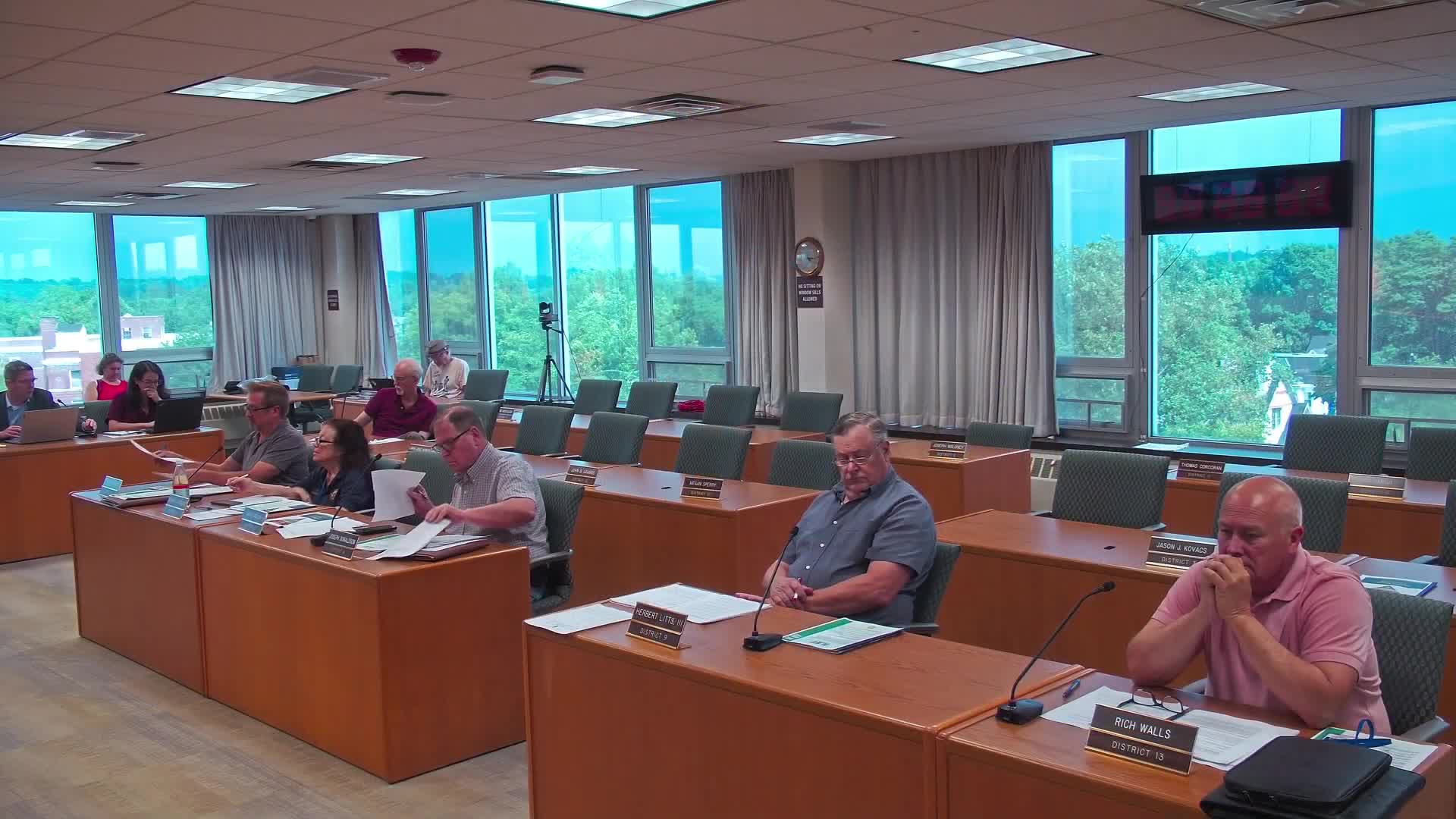
Summary
The Ulster County Resource Recovery Agency reported lower-than-expected tonnage through April, which will raise per‑ton tipping fees, and described steps toward a reuse “hub-and-spoke” center, a reuse coordinator position, an RFP for an operator and preliminary leachate treatment options including a roughly $1 million county-scale system.
The Ulster County Resource Recovery Agency (UCRA) told the county Energy, Environment and Sustainability Committee on July 1 that lower-than-expected waste volumes through April will increase per‑ton tipping fees and that the agency is advancing a reuse “hub-and-spoke” plan and leachate-treatment options.
UCRA Director Ryder told the committee the agency recorded 41,048 tons of municipal solid waste and construction/demolition debris through April. Multiplied out (acknowledging seasonal variation), that pace would produce roughly 123,000–124,000 tons for the year versus the agency’s 142,000‑ton planning target, and the agency expects to lower its tonnage target when it finalizes next year’s budget. Ryder warned that spreading fixed expenses over fewer tons will “raise the tipping fee slightly.”
The numbers matter locally because Ryder said UCRA currently budgets most operations from tipping fees. She told members that contract increases for disposal and transport appear in recent bids at roughly 5% and that collective bargaining agreements expiring this year will add pressure on costs. The agency’s stated “functional” tipping fee for MSW and C&D is roughly $143 per ton when fuel surcharges are included, Ryder said; she compared that with neighboring counties she cited as examples (Orange County, Sullivan County). The agency has not received direct taxpayer subsidies since before 2012, she said.
Why it matters: lower volumes mean higher per‑ton costs to users and municipalities; the agency is proposing structural changes—reuse and diversion programs and new funding mechanisms—to try to limit future increases and to reduce landfill demand.
Ryder described the agency’s repower and reuse-innovation efforts: a hub facility lease under negotiation, a plan to issue an RFP for an operator of the hub-and-spoke network, and a pending request that UCRA’s board create a “reuse coordinator” position and approve a salary. The agency hopes to have a lease ready for the August board meeting and said it will hire a vendor to collect reusable goods left at town transfer sheds and bring them to the hub. Ryder said some town supervisors are concerned the town-level hauling and diversion requirements in new hauling contracts could increase their costs, and she emphasized the agency expects towns to cooperate to meet county diversion goals.
Committee members asked about specifics: what types of town requirements will appear in hauling contracts; whether pilots in Hurley could scale countywide; and how diversion affects the agency budget. Ryder explained that diversions that occur before material reaches the agency’s scale (i.e., direct drops to a hub or alternate site) reduce budgeted revenue by roughly $30–$35 per ton because those diverted tons do not cover the agency’s assumed operations revenue embedded in the tipping fee. Conversely, building a diversion facility on the agency site and receiving diverted material over the scale could save the agency about $100 a ton versus sending that material to a landfill, she said, but that would require a change to the DEC permit.
Leachate treatment: Ryder described preliminary results from a Hurley pilot and secondhand lab reports that showed reductions for many constituents but persistent exceedances for a few compounds, including PFOS above a regulated threshold in the samples shared. She said the pilot company offered multiple treatment levels and that a centralized county-scale treatment system (for example at the Kingston wastewater plant or the Town of Ulster landfill) could cost on the order of $1 million for a countywide installation, depending on system design and permit needs. Ryder said UCRA has engaged an engineering firm and would have more detailed quotes and a presentation to the UCRA board in the coming weeks.
Next steps and direction: the agency will present a reuse‑hub lease in August, issue an RFP for an operator, pursue Climate Smart Communities and other grants to fund in-vessel composting and hub functions, and seek board approval to create the reuse coordinator role. Ryder also said agency leadership is exploring alternative funding mechanisms (including a user fee on the county property tax roll) to reduce dependence on tipping fees; she noted that implementing and collecting a user fee would require additional staff and possibly a home rule request.
Ending: Committee members pressed the agency for more detailed cost estimates, pilot results from Hurley, and clarity on how hauling contract language will allocate responsibilities to towns. Ryder said she will return with additional data at future meetings and that the agency hopes to refine targets and budget assumptions before finalizing next year’s budget.