Get Full Government Meeting Transcripts, Videos, & Alerts Forever!
Get email alerts on the Early Childhood Education topic
No spam. Unsubscribe anytime.
Parents, providers and philanthropies urge council not to limit Children’s Opportunity Alliance role
Summary
Parents, family childcare providers, philanthropies and COA board members urged the Montgomery County Council on July 15 not to restrict the Children’s Opportunity Alliance’s grant-making and direct-support activities in Expedited Bill 23-25, saying COA provides essential, culturally responsive and nimble services to expand pre‑K seats and help small providers access state funds.
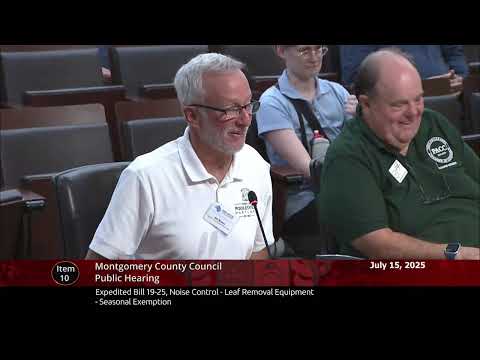
Dozens of parents, early-childhood providers, nonprofit leaders and philanthropies urged the Montgomery County Council on July 15 not to restrict the Children’s Opportunity Alliance (COA) by prohibiting it from awarding grants, entering provider contracts or delivering direct supports under Expedited Bill 23-25.
Several witnesses described COA as a nimble, community-rooted nonprofit that fills gaps county agencies cannot, citing COA’s role in helping small family childcare providers apply for and manage Maryland Pre-K expansion grants, distributing philanthropic seed grants, and organizing outreach and capacity-building. "As COA collaborates with its hardworking public partners, it also must be allowed its good measure of independence," testified Pat Rupert, who represents the business community on the COA board.
Kimberly Rusnak, COA’s executive director, told the council that COA has raised private funds (she cited $674,000 raised in three years) and that COA-directed grants to nonprofit partners have supported capacity building and helped providers prepare for public funding. Several family childcare providers and community groups said they rely on COA-funded mentoring, Spanish-language supports and hands-on technical assistance that county programs did not deliver at that scale or in those languages.
Speakers who work directly with family childcare providers said the pre-K expansion application process (administered by the state) is complex and that small providers need assistance to participate. Local providers and coalitions—including the Latino Child Care Association, Family Child Care Association of Montgomery County, and the Hispanic Chamber—told council members that COA’s ability to award small strategic grants and to partner with community groups is critical to expanding equitable access.
Opponents of the current bill language—several board members and business leaders among them—asked the council to revise the proposed restrictions so COA can continue limited grant-making and technical assistance while preserving transparency and avoiding duplication. Supporters of changes said they were concerned about potential conflicts if a convener also competes for funds; speakers on both sides urged a collaborative approach before final legislative changes.
Council staff scheduled a joint Health and Human Services and Education & Culture Committee work session on July 23, 2025, and asked for materials by July 16, 2025. The public hearing record closed July 15.