Lewisville ISD reports gains in early literacy, math and college-readiness metrics; CCMR participation rises
Loading...
Summary
District staff said most end-of-year targets were met, third-grade and math results showed notable growth, and college, career and military readiness (CCMR) measures improved as the district expanded testing. Trustees and staff flagged continued focus on sustaining gains and narrowing campus-level gaps.
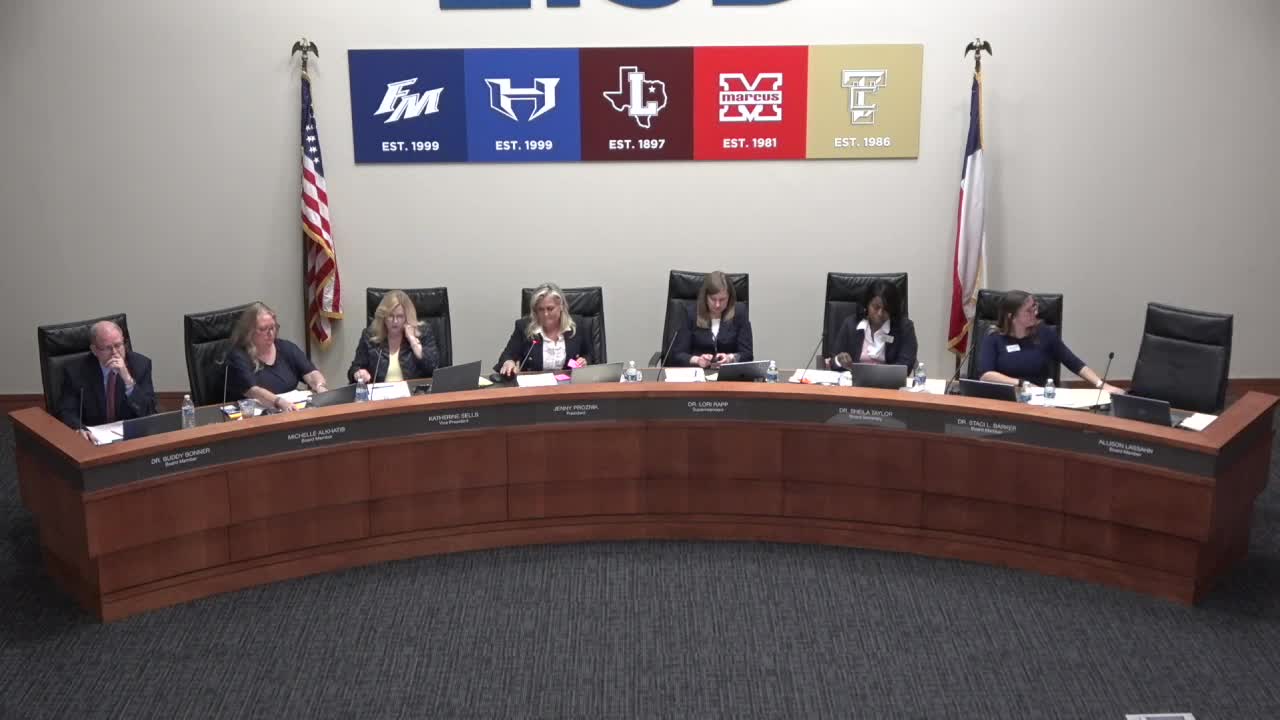
Lewisville ISD staff on Tuesday told the Board of Trustees that end-of-year student-assessment targets were met districtwide in most categories and that college-, career- and military-readiness (CCMR) measures increased after the district expanded testing opportunities.
Adrian Moreno and the learning-and-teaching team presented results showing broad gains: staff said more than 99% of students completed the district’s end-of-year reading and math assessments and that many campuses met or exceeded targets. The presentation noted that, in third-grade reading and math, the district met most targets and that many campuses showed double-digit growth from beginning to end of year.
The district also increased the number of students taking college-readiness exams by administering TSI to students who had completed Algebra II or English III; testing numbers rose from about 3,500 the prior year to 9,635 this year. Staff reported that roughly 80% of seniors had completed at least one college-readiness exam and that the class of 2025’s seniors meeting TEA CCMR criteria rose from 44% at the start of reporting to about 64% in the most recent run of data — figures staff cautioned are preliminary and subject to TEA finalization.
Trustees asked about patterns at campuses that do not meet targets. Learning-and-teaching staff said they track trends, target new teachers and high-need campuses for personalized coaching and PLC (professional learning community) support, and conduct three campus check-ins per year on CCMR progress. Staff described roughly 3,800 personalized coaching and PLC interactions this year despite a reduced central-office instructional staff.
Trustee Stacy Barker praised gains among special-education students and noted the district’s intervention work. She asked how the district targets students who enroll midyear; staff described frequent screening (DIBELS, Istation) and benchmarks that let teachers quickly diagnose and support new students. Trustee Buddy Bonner asked whether low-performing campuses show persistent patterns; staff said they analyze longitudinal trends and combine that analysis with targeted coaching and principal-level interventions.
Staff also warned trustees that the district will change its assessment tool next year (moving away from Istation), a change that will require recalibrating targets and the district improvement plan for 2025–26. Administration said those new HB3-aligned targets will be presented in September when the revised baseline is available.
The board did not take a vote on the assessment update; the presentation served as an informational update and a preview of DIP (district improvement plan) and long-range plan adjustments.