Get Full Government Meeting Transcripts, Videos, & Alerts Forever!
Get email alerts on the Budget And Procurement topic
No spam. Unsubscribe anytime.
Canyon ISD approves April financial report, budget amendment and new interlocal purchasing agreement
Summary
Trustees approved the district’s April financials, a budget amendment reallocating campus funds to technology and other needs, authorized a procurement interlocal and discussed moving accounting/payroll from Munis to Skyward Business.
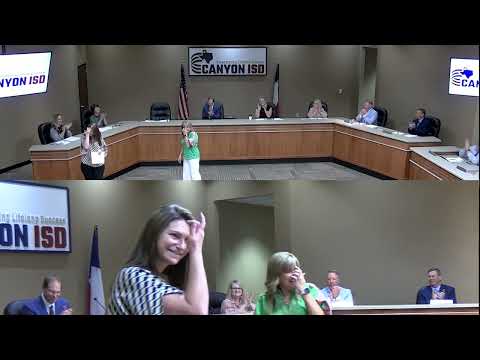
The Canyon ISD Board of Trustees on June 9 approved the district’s monthly financial report for the period ending April 30 and authorized a budget amendment reallocating campus and departmental funds for summer planning and district priorities.
Leila (staff member) presented reconciled financials as of April 30, reporting total cash and investments in the district’s accounts (cash available approximately $68.4 million) and a year‑to‑date interest income of about $2.0 million. She said general fund revenue collection is at roughly 89% for local revenues and 70% for state revenues and noted changes to federal reimbursement (SHARS) have reduced previously expected Medicaid reimbursements.
Trustees approved the monthly financial report by a 6–0 vote with Trustee Carrie Trice recorded as abstaining. The board then approved a budget amendment that consolidated end‑of‑year campus balances and added funds to function 53 (data processing/technology) to support the district’s transition from Munis to Skyward Business for accounting, payroll and HR. Leila said the swap is intended to reduce duplicate software, provide integrated time‑clock and leave tracking, and address limits in Munis’s concurrent‑user processes.
The board also approved an interlocal agreement with the Central Texas Purchasing Alliance, which staff said will let the district access competitively bid contracts, broaden vendor options and may yield rebates on purchases. Staff said participation in the purchasing cooperative does not obligate the district to use its contracts for any purchase; the district can still run its own procurement when appropriate.
Separately, administration noted food‑service and special‑revenue items, debt‑service schedules and that recent federal reallocations required quick spending or waiver requests to carry funds forward.
The motions passed unanimously on the budget amendment and interlocal agreement (7–0).