Get Full Government Meeting Transcripts, Videos, & Alerts Forever!
Get email alerts on the Student Discipline topic
No spam. Unsubscribe anytime.
Mukilteo board reviews yearly revisions to student rights and responsibilities handbook; key changes target vaping, self-harm guidance, bus conduct
Summary
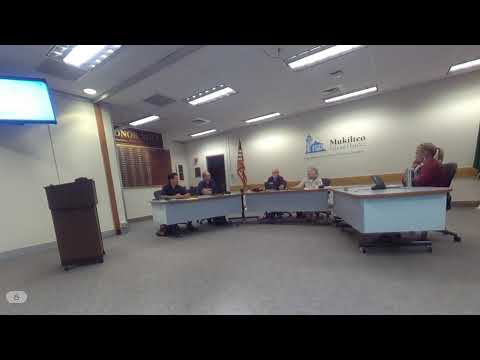
Mukilteo School Board members received a first reading Tuesday of the district—s annual Student Rights and Responsibilities handbook revisions, which staff said reorganize language to align discipline descriptions with Office of the Superintendent of Public Instruction (OSPI) guidance and state rules.
Mukilteo School Board members received a first reading Tuesday of the district—s annual Student Rights and Responsibilities handbook revisions, which staff said reorganize language to align discipline descriptions with Office of the Superintendent of Public Instruction (OSPI) guidance and state rules. The district presenter said the update condenses and reclassifies offenses under a clarified "exceptional misconduct" section and moves several items so discipline categories better match state-authorized responses. Staff flagged new or relocated items including added language on self-harm support, bus conduct changes to align with current practice, the inclusion of vaping under substance misuse, and relocation of extortion and similar items into theft/robbery categories. Staff also removed academic dishonesty from the list of offenses that automatically qualify as "exceptional misconduct" because, they said, OSPI guidance does not treat routine academic cheating as grounds for automatic exclusion from school. Why it matters: the handbook is the annual, public summary families and students receive about discipline expectations and appeals; board members asked whether revisions are clear to students and families and if the appeals process is explicit when a discipline action is imposed. What staff presented and the board—s discussion - Process and partners: a district staff member presented the draft and credited Beth Vandermeen for long-term policy work and the ad hoc committee that reviewed "exceptional misconduct." Committee members listed in the discussion included school administrators, a district administrative assistant and a parent representative. Staff said the handbook is updated annually, reviewed against WAC/OSPI guidance and local practice, and translated for families when adopted. - Reclassifications and wording changes: staff described consolidating repetitive wording under "exceptional misconduct" so examples that "materially and substantially interfere with the educational process" appear together. Academic dishonesty was removed from the automatic exceptional-misconduct list; staff emphasized that academic misconduct will still appear in local school handbooks and can, depending on circumstances (for example, theft of test materials or digital trespass), be disciplinary. Vaping was explicitly added under substances/misuse-of-chemicals language. - Bus conduct: staff said district practices for bus conduct were found not to match the old handbook text; the revised draft brings the handbook language into alignment with principals— practices and the district—s current policy implementation. - Self-harm and student supports: the draft adds language about identifying and supporting students who report self-harm; staff indicated further detail appears later in the booklet (pages 21—22 in the draft) and that they will tidy sentence construction before final publication. Board questions and staff responses Board members asked for clarity on the appeals process and how that information is provided to students and families when disciplinary action is imposed. Staff responded they will confirm the cross-reference in the full student handbook and said that when discipline is imposed students receive the rights information in writing and verbally at the time of the action. A board member asked whether a supervised student demonstration that did not disrupt classrooms would be treated as protected speech; staff said the district permits student demonstrations that are organized and non-disruptive, but disruptive behavior during such events could trigger discipline under the handbook—s disruption provisions. Unresolved items and next steps - Appeals process placement: staff will verify and, if needed, add a clear cross-reference in the handbook so students and families can find appeal steps; the transcript record of the meeting did not show a direct edit during the first reading. - Elementary procedures: a board member asked how certain infractions are handled in elementary grades; staff said they would follow up with school-level practice descriptions and share them with the board. - Finalization: this was the first reading; staff signaled the document will be revised for clarity (sentence flow and link updates) and returned to the board for subsequent action and publication in multiple languages. Context and outreach District staff noted individual schools publish their own handbooks that expand on the district booklet; staff said schools use a variety of classroom and activity-level methods (presentations, scavenger-hunt style orientation, student activities) to make handbook expectations accessible. The presenter said the ad hoc committee—s work focused on alignment with OSPI/WAC and consistent application by principals. Ending Board members thanked staff for the work and asked staff to return with clarified appeals language and any school-specific elementary practices. No formal board vote on the handbook revisions occurred at this meeting; the item was presented for first reading and feedback.