Get Full Government Meeting Transcripts, Videos, & Alerts Forever!
Get email alerts on the Budget Tax Values topic
No spam. Unsubscribe anytime.
Butte-Silver Bow finance director: taxable value roughly unchanged; budget presentations rescheduled
Summary
Finance Director Karen Hassler told commissioners the county's preliminary market value rose but taxable value was essentially flat due to recent state legislation; the council moved several budget hearings and the formal FY26 presentation to August dates.
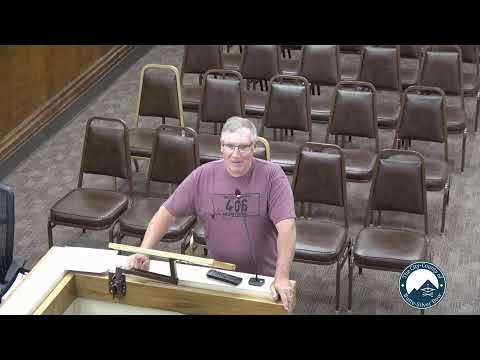
Karen Hassler, Butte-Silver Bow finance and budget director, presented preliminary property-valuation figures from the Montana Department of Revenue at the July 16 council meeting and explained how recent state law changes affect taxable value and local budgets.
Hassler said market value for the taxing jurisdiction rose from about $5,000,168,000 in tax year 2024 to roughly $7,000,000,000 in the preliminary 2025 numbers, but that taxable value (the number used to calculate most levies) fell slightly—about $327,000—because the 2023 legislative session changed tax-rate tiers that reduce the taxable portion of market value. “We are at 99.5% of what the taxable value was last year,” she told commissioners, and said the administration based early budget planning on a status-quo assumption.
The council moved multiple budget items and public hearings at the request of Director Hassler and Commissioner Thatcher. Commissioners voted to reschedule the fiscal-year 2026 budget presentation to Aug. 6, 2025, and to move public hearings on metro sewer rates and solid-waste rates to Aug. 13 and Aug. 13 respectively; the motions passed by recorded votes.
Hassler cautioned the numbers were preliminary: centrally assessed values (large utilities and other state-assessed properties) were not yet included and property owners may file valuation protests that could change final taxable values. She said department staff will receive certified values in August and will follow up with updated, certified figures.
Questions from commissioners focused on the drivers of value change in specific taxing jurisdictions and whether new construction or depreciation (in the case of certain industrial districts with personal property) explained the variances. Hassler said some districts reflected commercial development (for example, a Harrison Avenue URD showed an increase) while others with high personal property content showed declines because of depreciation.
Action and next steps: The council formally rescheduled the FY26 presentation and associated public hearings; staff will return with certified Department of Revenue values when available and proceed through the normal public process for final budget adoption and rate-setting.