Get Full Government Meeting Transcripts, Videos, & Alerts Forever!
Get email alerts on the Marinas Boat Ramps topic
No spam. Unsubscribe anytime.
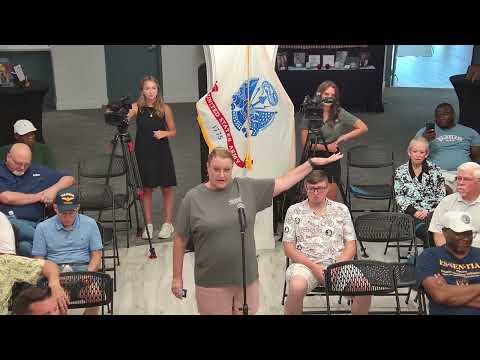
Town hall explores boat‑ramp fees, resident passes and options to fund marina slips
Summary
A wide-ranging public discussion covered user fees for boat ramps, resident pass concepts, grant matches, marina financing and options to accelerate construction of wet slips; staff and commissioners agreed to study resident passes and to ask potential partners about funding options.
Citizens and commissioners spent significant time at the town hall debating whether Panama City should charge for boat-ramps and marinas, how to prioritize marina upgrades, and who should pay for slips and maintenance.
Several speakers urged creation of a resident-launch pass and pay-per-use system for city-owned ramps. Kenny Bostick, who grew up in the city, said local residents effectively subsidize free public launches used by out-of-county visitors and proposed a tiered system: an annual Panama City resident pass plus pay‑as‑you‑launch fees for non‑residents. ‘‘We should charge $20 just like Saint Joe, Mexico Beach. If you’re not a Bay County resident, you would have to pay it,’’ Bostick said, noting that other local governments use user fees to fund maintenance.
Speakers and commissioners cited several funding tools used or discussed in prior marina work: state and federal grants (speakers referenced Fish and Wildlife Conservation Commission grants and recent state appropriations), the city’s prior $8 million borrowing for a downtown bulkhead, private partnerships and bond/loan options. Staff and commissioners said prior projects — the downtown promenade and floating docks — used partner funding arrangements in which private entities provided capital and the city retained ownership of some assets.
Multiple participants urged that use fees be restricted to a dedicated fund for ramp and marina maintenance, dredging and grant matches. ‘‘I’m a big fan of user fees — as long as the money is constrained for the thing that we’re actually…fortifying,’’ a resident said. Staff and commissioners agreed this approach would be preferable to putting marina revenues into the general fund.
On implementation, the city manager and staff outlined possible next steps rather than policy choices. At one point the commission directed staff to research a resident-pass program and bring findings back at a virtual meeting by the end of the summer. Commissioners also agreed the city could explore asking private partners — including the current downtown operator and regional developers — whether they would fund an initial tranche of slips; staff noted prior arrangements where partners built docks with repayback or revenue-share arrangements.
Marina financing and management were debated: some commissioners argued Panama City should avoid long-term marina operation and instead own assets while contracting private operators; others said the transition to private management should await sufficient slip inventory and an economically sustainable operation. Participants noted a permit for an initial 50 slips already exists and suggested asking potential partners whether they would fund those first 50 slips or help bond the work to accelerate delivery.
No formal vote was taken; staff were asked to return with a written staff report on a resident-pass option, financing mechanisms and potential partner interest. The discussion included repeated requests that any new fees be placed in restricted funds earmarked for marina maintenance, dredging and grant matching.