Get Full Government Meeting Transcripts, Videos, & Alerts Forever!
Get email alerts on the Student Assessment topic
No spam. Unsubscribe anytime.
Watchung Hills presents NJGPA results; math pass rates rise and administrators cite AI tools for deeper analysis
Summary
District officials reported a 4.5% increase in math pass rates and a small ELA gain on the New Jersey Graduation Proficiency Assessment. Administrators described multiple graduation pathways, subgroup gains, targeted supports for students who must retake exams, and pilot use of AI tools to analyze performance data.
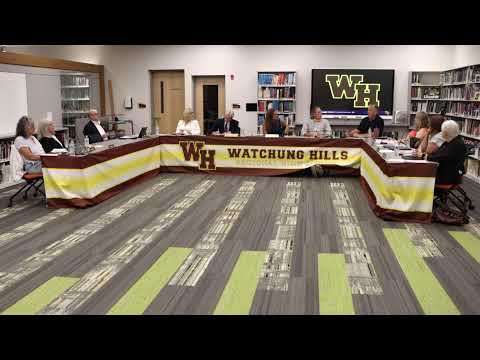
School administrators told the Watchung Hills Regional High School Board on July 9 that students’ performance on the New Jersey Graduation Proficiency Assessment (NJGPA) improved this year, with particularly strong gains among several subgroups.
“We had 419 test takers,” Michael D’Alessio, director of mathematics and assessment, said, and he reported a 4.5 percentage-point increase in the math pass rate and a 0.1 percentage-point increase in English language arts compared with the prior year. He described the NJGPA as a binary graduation test: “You either pass it or you don’t,” he said, and outlined alternative pathways for students who do not reach the NJGPA passing score, including qualifying scores on the PSAT, SAT, ACT or ACCUPLACER, October retests in senior year, and a portfolio/appeals process.
Administrators highlighted subgroup progress in math: Black/African American students improved by 14.8 percentage points, Hispanic/Latino students by 6.7 points, and students identifying as two or more races by 7.4 points. D’Alessio credited a student-centered approach that included revised staff scheduling, expanded educational-technology platforms (he named platforms used by the district), curriculum review aligned to state standards, and a multi-tiered system of supports involving guidance counselors, case managers and school psychologists.
Board members asked for additional cross-tabulated counts: D’Alessio and colleagues said they would provide a unique count of students needing interventions. At the meeting a board member reported that 49 rising seniors were the total number who needed some form of intervention to meet graduation requirements at that time; administrators cautioned that the number can change with results reported after transfers or additional testing.
Mary Ellen Phelan, supervisor of English, described instructional changes the district plans to emphasize, including increased work on nonfiction and poetry and a stronger emphasis on vocabulary in context beginning in ninth grade to prepare students for the tenth-grade-aligned ELA assessment.
Administrators also described experimentation with artificial-intelligence tools — including Google Gemini and a notebook large-model environment — to help analyze three years of assessment data and to create teacher-facing reports. They said professional development on those tools is scheduled in August and September so teachers can use AI to interrogate local data.
Administrators said the district intends to offer targeted summer and fall supports — an NJGPA success class, algebra review and English 4 sections — to help students who must retake sections in the October retest or pursue alternate pathways, and they said students and parents will receive communications about available supports.
No board action beyond receiving the presentation was taken at the meeting.