
Watchung Hills board hears federal, state aid updates as local budget concerns loom
Get AI-powered insights, summaries, and transcripts
Subscribe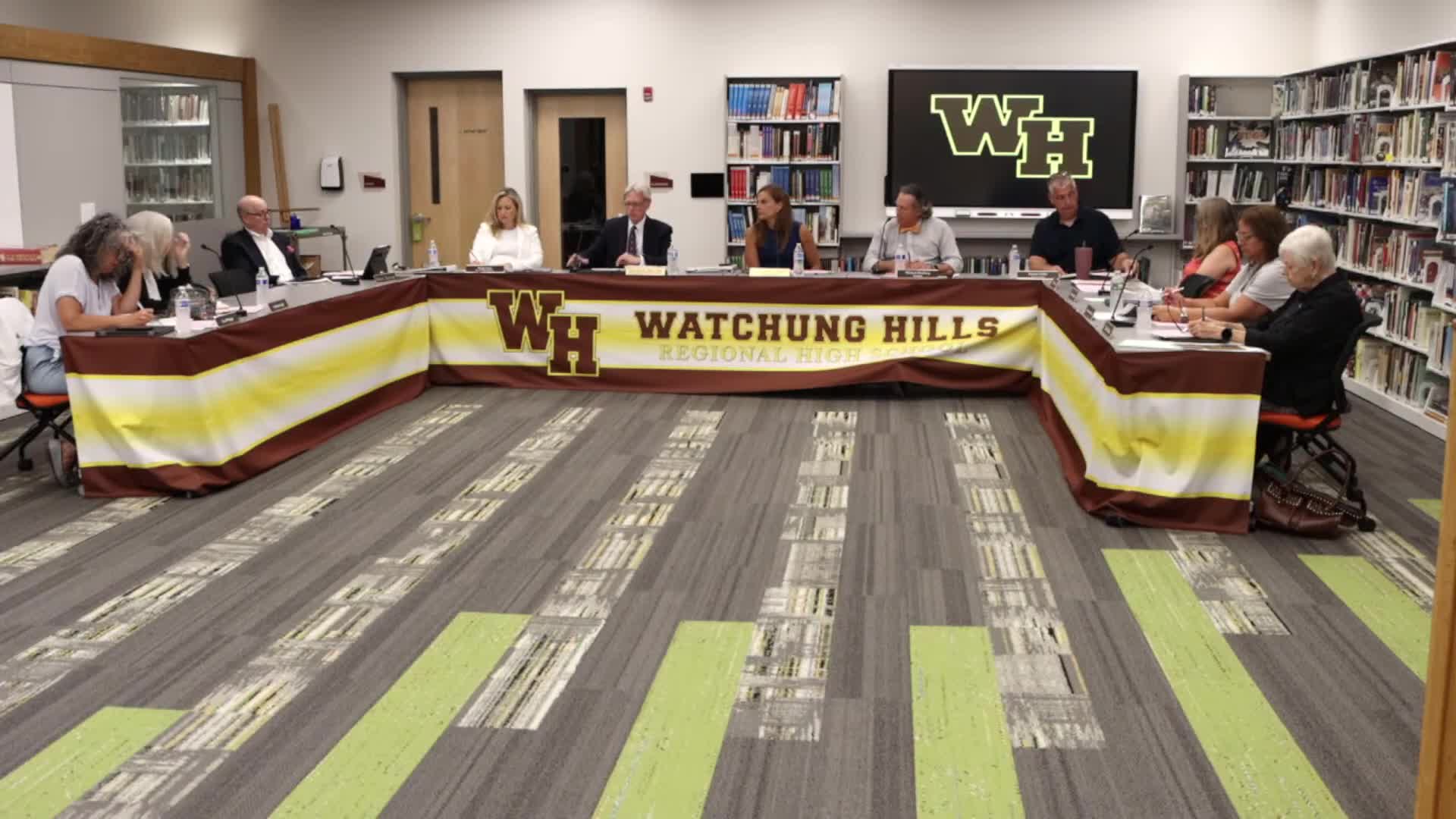
Summary
At its July meeting, the Watchung Hills Regional High School Board of Education heard updates on federal and state education funding that school officials said will affect next year’s budget planning.
At its July meeting, the Watchung Hills Regional High School Board of Education heard updates on federal and state education funding that school officials said will affect next year’s budget planning. A school official told the board the district’s Individuals with Disabilities Education Act (IDEA) allocation for the coming year is $367,000, and administrators said they will need to apply to receive the money.
The update matters to taxpayers and district planning because other sources of state and federal support remain uncertain or reduced. Administrators reported that applications for state “extraordinary aid” — a reimbursement for very high-cost special-education placements — totaled about $1.8 million, but the state’s reimbursement percentage had fallen from 61% to 51% for the current cycle; administrators said that percentage is projected to fall to about 40% next year. The district had budgeted $300,000 for extraordinary-aid revenue and said its actual receipt was read out in the meeting as “9.78” (figure as stated in the meeting), which administrators noted is lower than expected.
School leaders also said they had not yet received notifications for several parts of the Elementary and Secondary Education Act (ESEA) grants — commonly referred to as Title I, Title II and Title IV funds — and that some Title funding remains withheld at the federal level. Administrators explained that Title I (Part A) funds have been released, but other Title programs were still pending; they said the Department of Education had been quiet about timing.
Board members and administrators discussed the strain unreimbursed special-education costs place on the local budget. A board member noted that statutory thresholds for state reimbursement apply only to extraordinary costs (the presenters said thresholds of $40,000 and $55,000 were used in the state application process) and that reimbursement is not dollar-for-dollar. Administrators said the effect is that local taxpayers absorb a larger share of high-cost special-education services when state reimbursements decline. Administrators told the board they plan to “tee up” a detailed budget discussion in October and November, and one board member cautioned that meaningful state action was unlikely before the November election and any lame-duck legislative session.
No formal board decisions or votes on the operating budget were taken at the meeting. Board members asked for additional detail in the fall budget cycle and said they would await further federal and state notifications before making changes to local plans.