Get Full Government Meeting Transcripts, Videos, & Alerts Forever!
Get email alerts on the Fire Staffing topic
No spam. Unsubscribe anytime.
Post-referendum staffing model cuts mutual-aid reliance, adds stability to Port Washington fire and EMS
Summary
Since a staffing-model change went into effect in mid-January, Port Washington fire and EMS leaders told the Police and Fire Commission the city has significantly reduced mutual-aid reliance for first-out ambulance calls and increased in-house capacity, while staffing gaps and onboarding costs remain challenges.
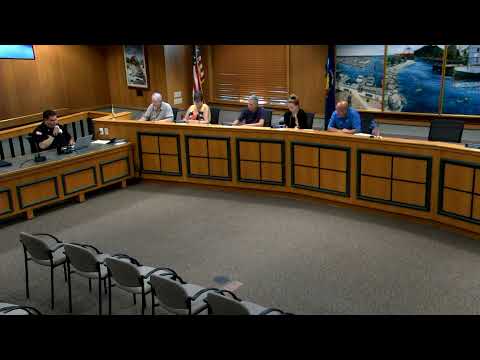
Port Washington’s revised public-safety staffing model has substantially reduced the city’s reliance on mutual-aid ambulances for first-out calls and provided more stable daytime fire staffing, Fire Department leaders told the Police and Fire Commission at its July 14 meeting. The staffing changes took effect in mid-January.
Chief DeBoer said the department has called mutual aid to cover a second ambulance only eight times since the new model began; he contrasted that with a period before the referendum when the city called mutual aid for a first-out ambulance “50% of the time.”
The shift has also freed full-time personnel to take on training and maintenance projects that previously went undone, DeBoer said, including rebuilding inspection software, replacing emergency lights and running community classes such as CPR training for Parks and Recreation lifeguards.
At the same time, the chief told commissioners the staffing model remains “somewhat fragile.” The department has seen extended injury leaves and recent departures: full-time firefighter-paramedic McKenna Ferry accepted an anesthesia technician job at Aurora Grafton and plans to remain part time with the department; firefighter Victor Petroff resigned for a new full-time position. The department plans to repost the firefighter-paramedic opening and to recruit for multiple part-time and paid-on-call vacancies, DeBoer said.
Recruiting remains a challenge across the fire service, DeBoer added. One lieutenant is exploring a firefighter-EMT internship program for next year, and the department will continue to draw from its firefighter-EMT candidate list if a paramedic-certified hire is not available immediately. DeBoer said the practical effect of limited part-time hours and onboarding costs is that the department must be selective when hiring to avoid unsustainable overtime.
DeBoer also told commissioners the department is rewriting its administrative policies and standard operating guidelines, a project he described as “about 200 pages” that will be divided into administrative and operational sections and reviewed by command staff and human resources before coming to the commission for final feedback and approval. He cited NFPA standards as a guide for the update.
Commissioners asked questions about the department’s overtime exposure and the long-term effect of the staffing model; no formal votes were taken on staffing or hiring at the meeting.
The department continues to monitor coverage and said it will present candidate names and personnel actions in coming meeting agendas when hires are ready to be approved.