Get Full Government Meeting Transcripts, Videos, & Alerts Forever!
Get email alerts on the Museum Expansion topic
No spam. Unsubscribe anytime.
Museum of Fine Arts outlines expansion at City Park, staff flag park access and parking concerns
Summary
Representatives of the Washington County Museum of Fine Arts presented schematic designs for a multi‑phase expansion that would add gallery and education space at the museum and a new education center at the Key Street site. City staff raised concerns about maintenance access and a near-term net loss of parking close to the museum.
Representatives of the Washington County Museum of Fine Arts on July 15 briefed the Mayor and City Council on schematic designs for a multi‑phase expansion that would enlarge the main museum on the lakefront and create an education center at the Key Street site.
The museum presentation, led by Sarah Hall of the museum, described a phased project that would add roughly 4,300 square feet to the museum's principal exhibition gallery (from the current about 2,400 square feet) and move classrooms and hands‑on education activity to a renovated 12,000‑square‑foot education center at Key Street. Hall said the work is intended to improve accessibility, increase space for larger exhibitions and expand free and paid youth programming. “We wanna be a Mid Atlantic destination,” Hall said, and later called the proposal “a vision that benefits everyone.”
Why it matters: museum officials said the additional gallery and education space would let the museum host more ambitious exhibitions and take more school groups and family programs at once. Officials said accessibility problems at the current main building'two flights of stairs and a long ramp to code'discourage some older or physically disabled patrons. The museum is already seeing regional visitors for current shows, Hall said, and expects larger temporary exhibitions to draw repeat day visitors from outside the county.
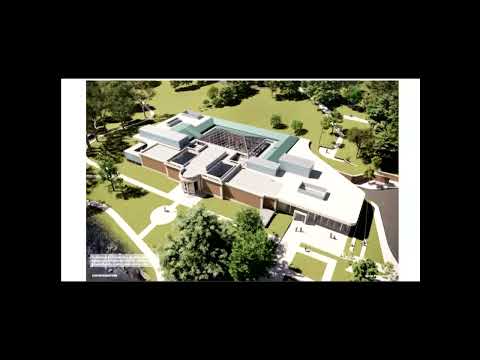
Key details and council/staff concerns: the museum team described three phases: first, renovation and activation of the Key Street education center; second, alterations to the main building; third, a larger possible reconfiguration of nearby park frontage that would reclaim lakefront space by rerouting Museum Drive and changing the Digby lot approach. The Key Street plan would convert a 12,000‑square‑foot historic building into an education center with studio space, a lobby gallery and community meeting rooms; the site plan includes a veranda, an artist‑in‑residence suite in the former stables, and an adaptable garage space proposed as a brown‑bag lunch area that could host events.
City staff raised two practical issues. First, maintenance access: staff asked how Parks & Recreation and maintenance crews would reach park infrastructure if the current Museum Drive access is altered. Second, parking: staff warned the rendering scheme would reduce parking close to the museum and noted the city expects to start Burnap parking lot construction next month to create additional spaces farther up the hill. Staff asked the museum and design team to study on‑site circulation, crosswalks between the Key Street site and the main museum, and event access for visitors with limited mobility.
Financing and next steps: museum leaders said they are in a quiet phase of private fundraising after a campaign study, and that schematic design by Cooper Robertson is complete; design development, construction documents and bidding would likely add about a year. Hall described possible public funding avenues (Project Open Space, state bond bills) and private donors but did not present any committed public funding. She invited council members to tours of the Key Street site and said the museum will pause before committing to the next design phase to ensure local partners are aligned.
Discussion vs. decision: the presentation was informational. No resolution or funding request was before council; staff asked the design team to refine traffic, maintenance and parking plans. The museum asked only for the council's continued engagement and possible political support for grant or legislative approaches in the future.
What to watch next: the museum plans to move into design development if fundraising continues; the council and city staff will review circulation and parking impacts and may bring follow‑up questions or requests for park‑design coordination with future agendas.
Speakers quoted or referenced in this article are those who appeared in the museum presentation and the city staff follow‑up. No formal vote was taken.