Get Full Government Meeting Transcripts, Videos, & Alerts Forever!
Get email alerts on the Foreign Policy Middle East topic
No spam. Unsubscribe anytime.
U.S. urges de-escalation after Israeli strikes in Syria, calls for withdrawals
Summary
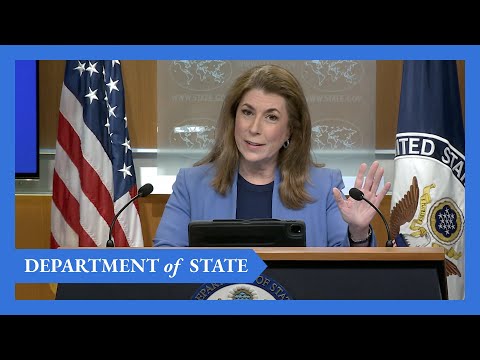
At a July 18 press briefing, State Department spokesperson Tammy said the United States is pushing for de-escalation after recent Israeli strikes in southwest Syria and is seeking withdrawals by both Israeli and Syrian forces from the area to reduce tensions.
The United States called on Friday for an immediate de-escalation after recent Israeli strikes in southwest Syria and said it wants both Israeli and Syrian government forces to withdraw from the contested area. State Department spokesperson Tammy said officials, including Secretary Rubio and President Trump, had been “involved in deescalating this, which is the key,” and that the administration expected “de escalation as soon as possible.” Tammy quoted Secretary Rubio’s description of the situation as “it's complicated” and said U.S. diplomats had been engaged “all morning long and all night long” with both sides to reduce the risk of further violence. Why it matters: U.S. engagement could determine whether the incident remains localized or escalates into broader cross-border conflict. The State Department’s public urging for withdrawals signals active U.S. mediation and seeks to limit further military action by both governments. Details: Tammy said the administration was calling on the Syrian government to “withdraw their military in order to enable all sides to deescalate and find a path forward.” She added the department viewed the episode as a “misunderstanding” between Israel and Syria rooted in long-standing local rivalries. Tammy also confirmed that Israeli forces intervened “to protect the Druze.” The spokesperson declined to provide operational details, saying she could not “speak to specific conversations or the exchanges diplomatically.” She said additional comments could come from the president and the secretary of state as events unfolded. Context and limits: Tammy repeatedly characterized the remarks as part of ongoing diplomatic engagement rather than a finalized U.S. policy decision. She cautioned against drawing broader conclusions, saying some matters — including exactly what areas forces should withdraw from — were not appropriate for her to specify at the briefing. Questions from reporters during the briefing probed whether Israel had informed U.S. officials before carrying out strikes; Tammy said she could not answer for Department of Defense or bilateral military arrangements and pointed reporters to relevant agencies. Reporters also asked whether U.S. officials had prior warning; Tammy said she was “not aware of” any such warning. What’s next: Tammy said the administration hoped to see “real progress” toward de-escalation in the next few hours and signaled further statements from senior officials were possible as diplomatic contacts continued.