Get Full Government Meeting Transcripts, Videos, & Alerts Forever!
Get email alerts on the Federal Education Funding topic
No spam. Unsubscribe anytime.
Harrison County schools told to pause new contracts as U.S. Education Department reviews FY25 allocations
Summary
District staff told the school board July 15 that the U.S. Department of Education has paused several FY25 federal grant allocations (Titles II, III, IV and IV-B), and advised districts to avoid entering new contracts until the review concludes; the pause is forcing local budget adjustments, use of carryover funds and temporary staffing plans.
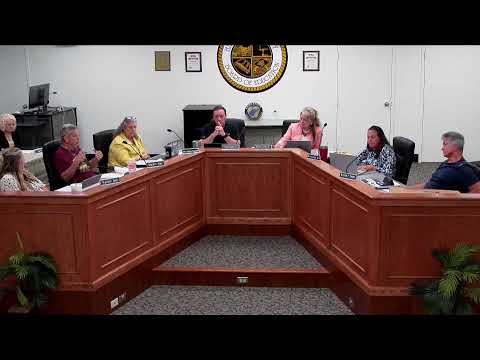
HARRISON COUNTY, W.Va. — The U.S. Department of Education has paused several fiscal 2025 federal grant allocations that Harrison County schools normally receive, district staff told the Harrison County Board of Education at its July 15 meeting, and advised districts not to enter new contracts until the department completes a review.
The guidance affects Title II, Part A (supporting effective instruction); Title III, Part A (language instruction for English learners); Title IV, Part A (student support and academic enrichment); and Title IV, Part B (21st Century Community Learning Centers). District staff said Title I, Part A preliminary and July final allocations were released and remain available; Title I, Part C (migrant education) is not allocated to the county. The U.S. Department of Education told the state there is no statutory deadline for releasing the paused funds.
District staff said the Department recommended reviewing immediately planned expenditures — such as salaries — and warned that even if funds are released they “may not be released in time” for planned spending. The presenter urged the board to assume the paused funds may not arrive and to avoid entering new vendor contracts tied to those grants.
District staff described a set of budget adjustments already made or planned to cover essential positions if the paused grants are not available. Those steps include moving portions of federally funded salaries into title carryover accounts and reserving a small charter-school contingency until October enrollment is final. The presenter also said the district intends to notify private schools served through equitable-share allocations not to enter contracts tied to federal titles until further notice.
District staff reported the following figures as the district’s current working estimates (district staff attributed these amounts during the meeting): a $94,515.36 reduction in the district’s July final Title I, Part A FY26 allocation compared with earlier estimates; an estimated Title I carryover of $514,293.27; a reserved charter contingency of $22,031.81; private-school equitable-share totals for Title I of about $44,367; a projected 20% reduction scenario for Title II that would lower that budget by about $85,000; Title III projected reduction of $5,291.50 (private-school portion $1,512.95); and Title IV projected reduction to about $263,759.81 (a decrease of $11,768.77 and private-school portions totaling $15,347.73). The presenter summarized that, if Title II, III and IV funding were not received at all, the combined impact could be in the range of roughly $625,000.
The district also described a new or renewed Title I, Part D (neglected and delinquent) allocation: about $85,203.04 was generated last year and an estimated $126,801.92 for the coming cycle. Staff said they have consulted with school principals and a local crisis center to identify how that funding could be used; the district is considering a grant-funded position to support students identified in the neglected and delinquent report, rather than a county-funded position.
Discussion at the meeting separated options from formal decisions: staff said they have already shifted portions of some curriculum specialist and administrative salaries into carryover funds and will continue reviewing staffing and licenses in spring budget planning; the board did not vote on any new permanent hires tied to the paused funds. Staff asked the board to recognize that title funds are “supplemental” and therefore must be used only for allowable activities under each title if released.
Board members asked about the length and risk of funding gaps. Staff noted that federal grant awards typically carry a two-year spending window and that the pause and uncertain timing of release were “alarming,” because delayed release could affect the district’s ability to spend within typical timeframes. Staff reiterated the Department’s explicit recommendation: do not enter new contracts tied to paused federal titles.
The district said it will notify private schools of the paused federal pots and recommended they not enter into contracts until the county confirms funding availability. District staff also said they would continue to consult with principals and Mr. Kirby (district staff who works with the impacted students) to finalize a job description and placement should the Title I, Part D funds be used for a grant-funded liaison or social-work–type position.
Board members did not take formal action on staffing tied to the paused funds; consent and personnel items later in the meeting were handled separately and are reported elsewhere.
Local officials will revisit budgets in the spring and when the Department issues further guidance or releases funds.