Get Full Government Meeting Transcripts, Videos, & Alerts Forever!
Get email alerts on the Cra Masterplan Visioning topic
No spam. Unsubscribe anytime.
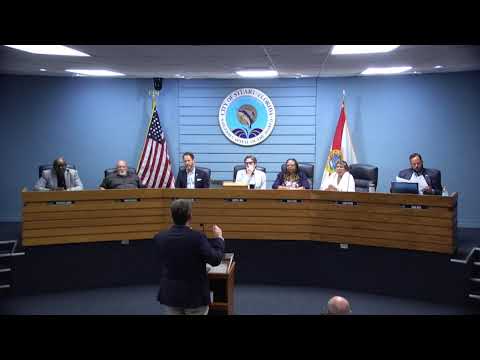
Stuart CRA board debates master‑plan scope and CIP priorities; members split on scale, emphasize parks and safety
Summary
CRA staff presented a proposed scope for a community visioning and master plan. Board members split between pursuing a costly charrette/master plan and prioritizing implementation of existing plans and targeted projects such as Guy Davis Park, Stittman drainage (DEP grant), quiet‑zone safety work and streetscape projects.
Pinal Gandhi Souda, CRA director, presented a proposed scope of work for a community visioning and master plan and asked the CRA board for direction on whether to proceed with a charrette‑style visioning process and which elements to include.
The draft scope compiled recommendations from the CRA Board (CRB) and staff and listed topics for potential consultant work: community visioning, redevelopment opportunities on publicly owned parcels (including City Hall site, Wells Fargo building and CRA‑owned parcels at 325 SE Ocean Boulevard and 330 SE Osceola Street), character districts, pedestrian connectivity, parks and public‑realm amenities, renderings and implementation plans, operation and maintenance cost estimates for new amenities, and alignment with existing plans such as the Triangle District Master Plan and East Stewart Master Plan.
Board members were sharply divided on the scope. Vice Chair Collins argued against spending large sums on new planning studies, saying the city already has extensive prior planning work and recent public input (more than 700 responses cited from Triangle District outreach). Collins recommended focusing limited CRA resources on parks, pedestrian safety, drainage and maintenance rather than broad new charrettes. Collins said she opposed waiving parking requirements and opposed large‑scale redevelopment that would change the town’s scale.
Board member Breckbill and others said the city needs an updated vision and community conversation to define long‑term goals — whether downtown should emphasize open space and family uses, or denser redevelopment — and urged a neutral, locally driven process rather than bringing in consultants with predetermined agendas. Several members called for piecemeal implementation of prioritized projects and for coordination with Main Street and community outreach events already scheduled.
Staff walked through a draft CRA capital improvements program (CIP) schedule included in the packet: Stittman neighborhood drainage and sidewalk improvements (staff noted a DEP grant of $1.6 million for that work), Dixie Highway improvements (grant funded, anticipated 2027), Osceola Street extension (contingent on City Hall relocation), Bayou pedestrian bridge (budgeted for 2027–28 and aligned with MLK streetscape), Triangle District and East Stewart streetscape design (2027 onward), and Tenth Street Community Center rehabilitation (post Guy Davis Park completion, 2028). Pinal Gandhi Souda asked the board whether those priorities match board expectations.
Board members stressed specific implementation priorities during the discussion: finish Guy Davis Park (and account for potentially higher costs), proceed with Stittman drainage since a DEP grant is secured, prioritize pedestrian safety and drainage throughout the CRA, and pursue quiet‑zone safety improvements at rail crossings rather than advancing quiet‑zone removal of bells until safety is demonstrably improved. Members asked staff for clearer cost and maintenance information before committing to new capital projects.
The board gave several specific directions to staff: compile and return with an inventory of parks in the CRA (including maintenance and operating costs and future plans), continue design and safety work on rail crossings and Confusion Corner, and prioritize execution of certain CIP projects (Stittman drainage, Guy Davis Park, Dixie Highway work and MLK streetscape) while coordinating grants. The board did not vote to launch a new, expensive citywide charrette at this meeting and asked staff to use existing community outreach results where appropriate and bring refined, prioritized options back to the board for budget consideration.