Get Full Government Meeting Transcripts, Videos, & Alerts Forever!
Get email alerts on the Heirs Property Assistance topic
No spam. Unsubscribe anytime.
Stuart CRA approves larger legal aid for heirs properties, adds 3-year payback on sales
Summary
The Community Redevelopment Agency voted to amend its heirs property assistance program to allow up to $3,000 per probate (maximum $9,000 per property), keep the program within the existing $25,000 annual budget and require reimbursement to the CRA if a property is sold within three years.
The Community Redevelopment Agency of the City of Stuart on a recorded vote approved an amendment to its heirs property assistance program that allows legal assistance payments of up to $3,000 per probate — not to exceed $9,000 per property — and requires repayment to the CRA if a property that received assistance is sold within three years.
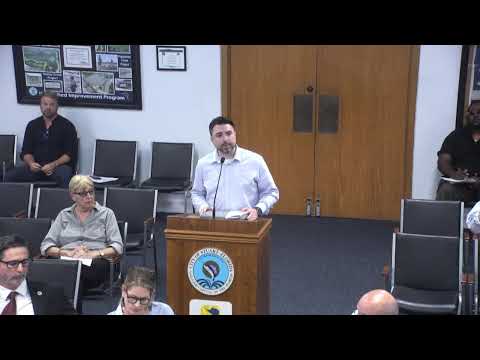
CRA Director Pannell briefed the board before the vote, explaining the program and why it was needed. “Heirs property ... is referred to property that's passed down from an owner to their children or relatives without any legal documentation,” Pannell said, describing how unclear title can block access to loans, grants and insurance and can lead to neglect and abandonment.
Board members said the change is aimed at clearing title for long-inhabited homes — mostly in the East Stewart neighborhood — so owners can access credit and grants or otherwise repair and retain their homes. The board previously capped assistance at $3,000 per property; the amendment changes the cap to $3,000 per probate with a $9,000 per-property ceiling to account for multi-probate cases. The CRA budget for the program remains $25,000 per year, staff said.
Board members debated safeguards to limit unintended outcomes, such as the city effectively subsidizing immediate sales. Several members proposed, and the board adopted, a repayment requirement that the CRA be reimbursed if the assisted property is sold within three years of receiving assistance. Board member Brechtel supported the program’s equity goal, saying it helps families “lift themselves up by cleaning up the titles” so they can access financing or repair their homes.
The board and staff identified approximately 31 parcels within the CRA that appear to be heirs properties based on county property-appraiser codes; most are in East Stewart. Staff said most identified parcels had 2024 assessed values under $300,000, with one exception around $345,000. Staff also said the city contracted with attorney Bonnie Brown to provide legal assistance under the program.
During discussion a staff speaker summarized applicable fee practice under Florida law, noting typical probate attorney compensation is structured by statute and can make multi-probate cases more expensive; that informed the board’s decision to allow payments per probate rather than per property. Board members also discussed possible repayment mechanisms similar to other city programs (for example, liens or prorated forgiveness after a set period). The motion that carried included the three-year repayment trigger at sale.
The board recorded the motion and vote after amendments and discussion. The resolution amends Resolution No. 04-2025 CRA and applies going forward; staff said there has been one applicant so far (a case requiring more than one probate). Staff emphasized that authorizing the policy change does not by itself spend funds beyond the adopted $25,000 annual appropriation and that future applications would still be evaluated under the amended guidelines.
The agency also heard a separate staff update about state legislation affecting CRAs and the Guy Davis Park funding request; those remarks were informational and did not change the heirs program action.
The CRA's amended program now allows legal assistance up to $3,000 per probate (maximum $9,000 per property), is funded from the CRA’s existing $25,000 line item, and includes a requirement that assisted amounts be reimbursed to the CRA if the assisted property is sold within three years.