Get Full Government Meeting Transcripts, Videos, & Alerts Forever!
Get email alerts on the Land Use Rural Update topic
No spam. Unsubscribe anytime.
Kitsap staff previews public process for 'Year of the Rural' rural and resource lands update
Summary
Kitsap County planners outlined the public engagement, SEPA and state transmittal steps for a September draft of the rural and resource lands chapter, potential code updates and remaining reclassification requests; staff plans work studies, hearings and a December adoption timeline.
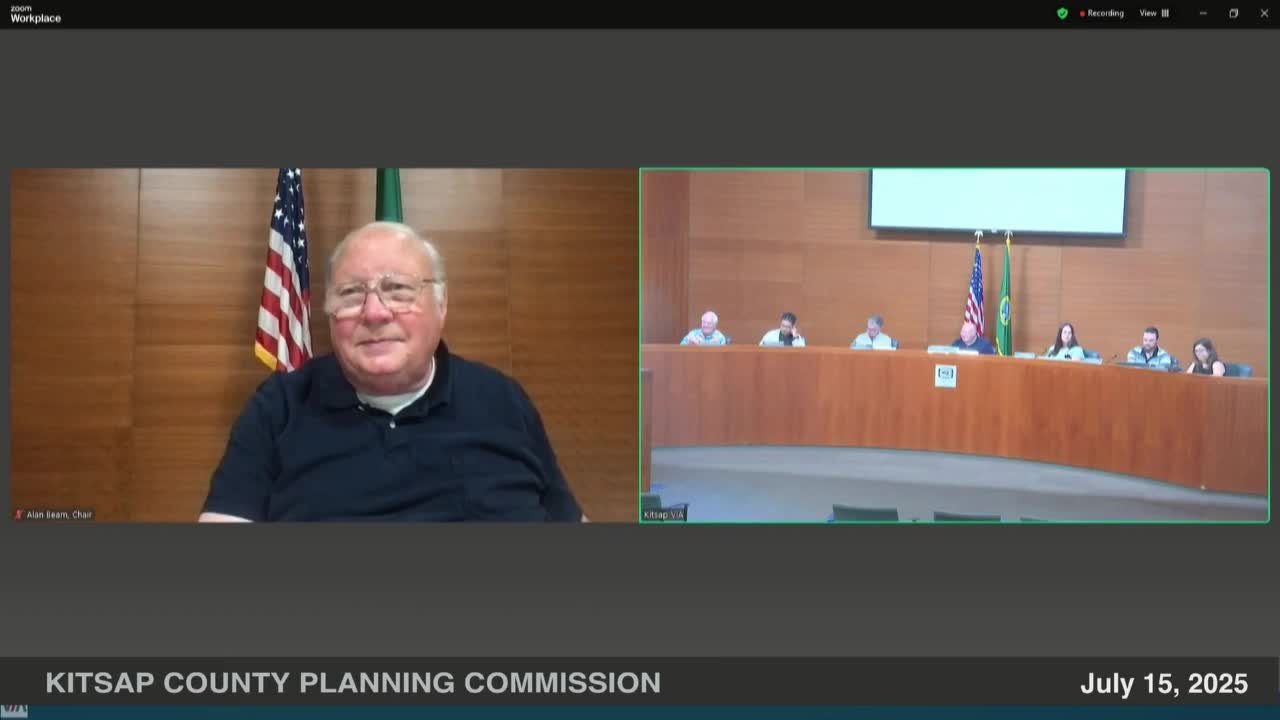
Heather Cleveland, a long-range planner with the Kitsap County Department of Community Development, briefed the Planning Commission on July 15 about the public process for the county's "Year of the Rural" project, which will update the rural and resource lands chapter of the comprehensive plan, consider potential code updates and make recommendations on reclassification requests.
Cleveland summarized required steps under state law and county code for comprehensive-plan changes and legislative actions, and she said the county will coordinate State Environmental Policy Act (SEPA) review and transmittal to state agencies. "We'll work over the next six weeks to determine" whether a SEPA addendum or a nonproject action is the appropriate path, she said. She noted the project will comply with the Growth Management Act transmittal requirements and county legislative procedures.
Cleveland described outreach already completed and the public process that will kick off after publication of draft materials on Sept. 2. She said staff will post draft materials at least 10 days before the first public hearing, hold public hearings with the Planning Commission (with a 15-day notice period) and compile comments into a deliberations matrix for commissioners. The process will include work studies, deliberations, findings of fact and a recommendation to the Board of County Commissioners, with a target adoption date in December.
Commissioners asked about the constituency and outreach for rural stakeholders. Cleveland said the county has undertaken multiple surveys, interviews and stakeholder outreach and that an agricultural working group was formed at the Board's direction; she said 14 of 17 redesignation requests were removed from the docket and three rural commercial/industrial reclassification requests remain and will be addressed in staff recommendations in September. She described the September draft as roughly "60 percent" complete and said the county plans to provide a 90 percent draft to the Board of County Commissioners before final adoption work later in the year.
Cleveland emphasized that the public comment record will be compiled and published and that staff will present a matrix of comments, recommended responses and the recommended commission action. She said the project will be transmitted to the state for review as required by law. No formal action by the Planning Commission occurred at the July 15 briefing; staff asked the commission to review materials and prepare for the September public comment period.
The county intends to use a combination of in-person and virtual outreach, to solicit comment from agricultural, forestry and mineral stakeholders as well as residents in rural areas, and to document outstanding issues that will require continued work beyond 2025.