Get Full Government Meeting Transcripts, Videos, & Alerts Forever!
Get email alerts on the Open Burning Ordinance topic
No spam. Unsubscribe anytime.
Lee County committee holds proposed open-burning ordinance for further revision
Summary
A draft ordinance to regulate open burning in unincorporated Lee County drew discussion about enforcement, right-of-way exemptions and next steps; the public safety committee agreed to hold the measure over for revision and further review.
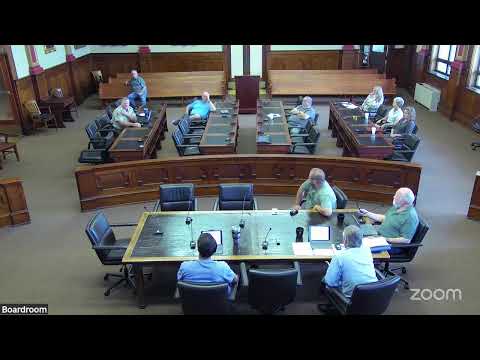
The Lee County Public Safety Committee on Thursday held over a draft open-burning ordinance for further revision after members raised enforcement and right-of-way concerns and asked staff to refine the language.
Committee members said the ordinance is intended to give the county local authority in addition to existing state rules and to provide enforcement tools for the sheriff and local fire districts.
The committee’s discussion focused on how the ordinance would be enforced, whether it should regulate burning in public rights of way, and how exceptions for townships or road commissions might work. Committee Chair (unnamed) said the draft’s "title and purpose again is just to create a Lee County open burning ordinance" and that the measure is crafted "to be adopted within unincorporated areas of Lee County, to protect life, property, and environmental quality in accordance with the Illinois Environmental Protection Act." The chair added, "We're not looking to tell them they can burn this. They can't burn that," stressing the draft is not intended to supersede state guidance on allowable materials.
Jeremy (staff member), who presented the draft, said enforcement would be available to local agencies: "It would be, you know, able to be enforced by Lee County Sheriff's Office, fire districts, and and designated code enforcement officers," and noted the draft removes a separate administrative appeals section because alleged violations would proceed through the court system. Jeremy also described the ordinance’s procedural path: if the committee moves it forward it will go to the executive board and then, if approved, to the full county board for holding-over and eventual adoption as an ordinance.
Committee members debated whether the ordinance should prohibit burning in rights of way. Chris Norberg asked, "Do we have the mechanism to enforce it? Do we have the personnel to enforce it?" and said common sense often governs burning decisions. Other members said right-of-way burning has practical uses for townships and road districts and recommended either removing rights-of-way language or drafting an exception process. One committee member suggested allowing a township supervisor or road commissioner to authorize or be responsible for certain right-of-way burns, provided notification and safety measures are followed.
Several members referenced recent local incidents that motivated the ordinance work. The chair and others mentioned uncontrolled burns that required fire department responses and the cost of dispatching emergency crews for preventable events.
Committee members also discussed operational details that staff will refine before the draft returns: notification requirements for controlled burns that close road segments, whether a county pamphlet or state brochure remains available to residents, and use of trained personnel to conduct controlled burns in conservation areas. Jeremy said the draft could be amended and that "anything can be changed" if the ordinance language proves impractical.
Rather than advance the draft now, the committee agreed to hold the ordinance over for more edits and to bring a revised version back next month. The chair said the committee would "hold it over until Becky till next month" for further work.
The committee did not take a formal recorded vote on the ordinance during the meeting; members instructed staff to revise the draft and return it for additional consideration.