Get Full Government Meeting Transcripts, Videos, & Alerts Forever!
Get email alerts on the Immigration Enforcement Local Policy topic
No spam. Unsubscribe anytime.
Residents urge county action after national reports of masked ICE agents; request ordinance requiring ID display
Summary
Multiple residents urged Clallam County commissioners to consider local measures—such as requiring agents working for ICE to display identification and prohibiting masks—citing national reports of masked agents and concerns about impersonation and civil liberties.
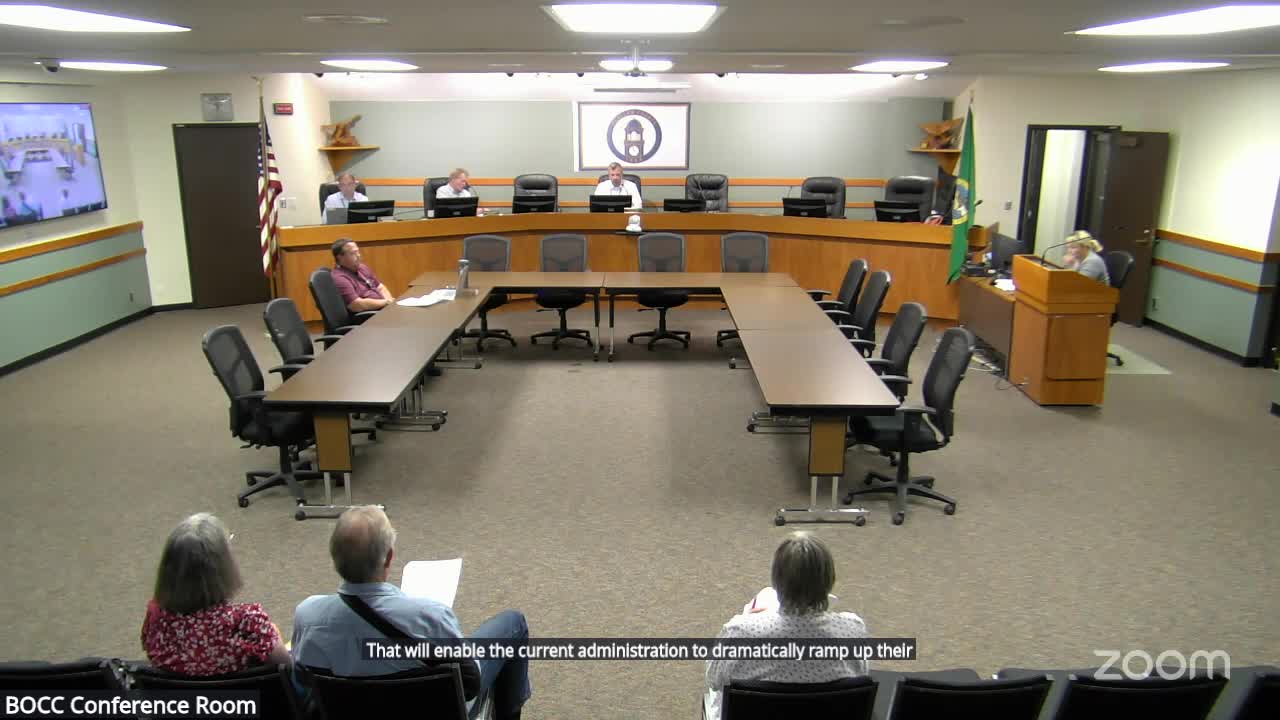
Several residents during public comment on July 15 urged Clallam County commissioners to consider a local policy or ordinance requiring Immigration and Customs Enforcement (ICE) agents or deputized agents acting on ICE matters to show identification and to prohibit masks while performing enforcement activities.
Speakers cited national reports that, they said, show masked agents refusing to identify themselves and increased funding for ICE that could expand detentions. Janine Blaylock of River Road asked commissioners to require ICE agents or deputies acting for ICE to “display identification and be prohibited from wearing a mask.” Norma Turner of Port Angeles provided clippings and urged the county to develop ethical standards and coordinate with law enforcement so residents feel safe.
Other public comments reflected mixed views on ICE. Denise Lapio of Sequim read a prepared statement that defended ICE agents, saying identification requirements can expose agents to danger from criminal cartels and arguing for cooperation with ICE. Public commenters asked commissioners to weigh civil‑liberties concerns, public safety risks and legal limits on local ordinances in considering any local action.
Why it matters: residents raised both safety and civil‑liberties concerns tied to federal immigration enforcement; commissioners received the comments but no ordinance was proposed during the meeting.
What’s next: commissioners did not schedule formal consideration of an ordinance at the July 15 meeting; staff and the board may review legal options and implications before any formal proposal.