Get Full Government Meeting Transcripts, Videos, & Alerts Forever!
Get email alerts on the Opioid Funding Harm Reduction topic
No spam. Unsubscribe anytime.
County allocates $50,000 in opioid settlement funds to harm reduction center; public commenters debate approach
Summary
Clallam County approved a $50,000 allocation of opioid settlement funds to support the Clallam County Harm Reduction Health Center; public commenters urged both expansion of detox services and cautioned against harm reduction as a sole strategy.
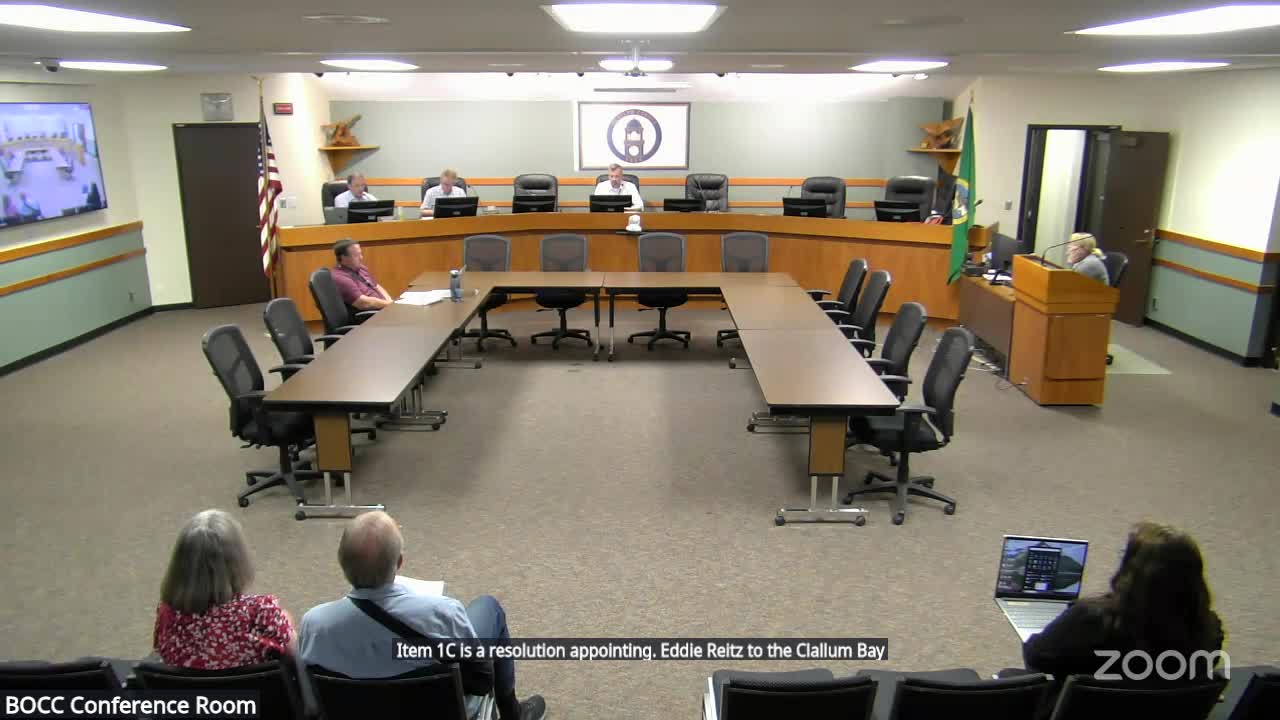
Clallam County commissioners on July 15 approved a $50,000 allocation from opioid settlement funds to support the Clallam County Harm Reduction Health Center.
County staff said the $50,000 represents a reduction in anticipated settlement money for the remainder of the calendar year and that the funds will be used as stopgap support for supplies and operations from July through December. The board approved the amount as part of the consent agenda and later noticed a public hearing for a debatable emergency to formally adopt the $50,000 allocation at the July 29 meeting.
Commissioners and staff said the allocation is interim while the Board of Health and the county Behavioral Health Advisory Board undertake a broader review of priorities for opioid settlement spending, which will include consideration of detox options among other interventions. A county official told the meeting that “detox centers” are one of the ideas the advisory body intends to evaluate.
Public commenters expressed sharply different views. John Worthington, who identified himself as from Sequim, said, “I’m against the $50,000… Some of these drugs are just too hard to let the public self administer.” Mark Curtis Swim, a recovering drug user who identified himself during public comment, said harm reduction without detox can prolong addiction and stressed the need for detox facilities: “When the risk of remaining an addict is greater than the reward of getting high, you’ll stop using.”
County staff and one commissioner responded during the consent discussion that they expected agreement on many goals but emphasized this allocation is a short‑term measure while broader prioritization proceeds. The consent agenda motion to approve the $50,000 allocation passed by voice vote.
Why it matters: opioid settlement dollars are flexible and have been used locally for treatment, prevention and harm reduction; the county’s decision establishes interim funding while the Board of Health and advisory groups develop longer‑term priorities.
What’s next: the county scheduled a July 29 hearing to formally consider the emergency appropriation; the Board of Health and Behavioral Health Advisory Board plan deeper review of how to allocate opioid settlement funds going forward.