Get Full Government Meeting Transcripts, Videos, & Alerts Forever!
Get email alerts on the Emergency Medical Services topic
No spam. Unsubscribe anytime.
Las Cruces moves away from AMR contract, plans fire-based EMS expansion
Summary
City leaders said July 14 they will not seek to renegotiate AMR’s county ambulance contract and are preparing to expand Las Cruces Fire Department transport capacity to reduce ambulance wait times and handle rising transport demand.
Las Cruces city officials told the City Council on July 14 they will not renegotiate the county’s ambulance contract with American Medical Response and are accelerating plans to expand fire-department ambulance coverage for 9-1-1 calls and transfers.
The decision followed an update from Fire Chief Mike Daniels on response-time shortfalls under the existing county-managed contract and the department’s preparations to add units and staff. “We notified AMR that we were not going to be interested in renegotiating a contract with them,” Daniels said during the work session.
Why it matters: Councilors were shown data that private ambulance response in the city met the contract’s 10-minute standard for critical emergent calls only 44 percent of the time and met noncritical emergent standards 54 percent of the time. The shortfalls occurred while the county paid a subsidy intended to support 9-1-1 ambulance availability; Daniels said the contract included liquidated-damage provisions and that AMR incurred large penalties in year one. The city is preparing to add rescue/transport units, hire single-role emergency medical technicians and paramedics, and rely less on the two-tier model in which private ambulances handle most transports.
Background and contract history: Daniels summarized a long-running shift. The city has operated in a two-tier system in which the fire department provides first response and a private ambulance provider handles transport. Las Cruces applied for its own ambulance certificate in 2019; the city and county later reached a settlement so the county would manage the ambulance contract while the city contributed response capacity. The contract that took effect in March required AMR to dedicate certain units to 9-1-1 and created penalties when response standards were missed.
Daniels said year-one liquidated damages were substantial. He also said AMR later proposed a higher county subsidy, sending a letter that asked to increase the subsidy request from $3,000,000 to $5,200,000; county and city representatives concluded that expanding the fire-based model was the preferable path and declined to renegotiate. “That system was… flawed,” Daniels said, adding that it lacked flexibility to match the current and growing demand.
Planned changes and budget implications: The fire department reported 4,500 transports in 2024 and projects transport demand could rise “between 10,000 and 12,000” over time as the system grows. The city currently operates four 24-hour transport units and has funding in the FY26 budget to bring a fifth 24-hour unit (Rescue 9) into service; staffing for that unit is scheduled to come online in mid-August, Daniels said. The department identified a need for three peak-hour units plus additional reserve ambulances to maintain depth for maintenance and repairs. Daniels said the city expects to recover more transport revenue as billing increases and from ambulance supplemental Medicaid payments, while personnel costs for added units were projected at roughly $1.2 million (city estimate).
County and other providers: Daniels said the Dona Ana County Commission approved funds on June 10 to help cover needs in areas surrounding the city and that preliminary county funding should cover roughly two of the additional ambulances the system will need. Two other private providers—EP Medical Transport and Elite Medical Transport—have applied to the New Mexico Department of Transportation for certificates to provide transfers in Dona Ana County; Daniels said those filings are public DOT matters and that private providers have expressed willingness to participate in mass-casualty agreements and act as backup when requested.
Interfacility transfers and 9-1-1 backups: Council members asked how interfacility (IFT) transfers will be handled once the contractual relationship ends. Daniels said hospitals, urgent cares, dialysis clinics, nursing homes and hospice providers will continue to arrange IFTs directly with transfer providers. The city will continue stakeholder meetings for facilities and providers to limit system bottlenecks because prolonged IFT backlogs can cascade into longer 9-1-1 response times, he said.
Billing and reconciliation: The city currently uses an external billing firm; Daniels said the existing contractor (EMSMC) can scale to handle increased billing volume. He said the city and AMR had “reconciled” year-one financial matters and processed AMR billing for the prior year’s penalties and payments; the remaining public subsidy is managed through county indigent-fund reserves and will be closed out as the contract ends. The contract’s current termination date was given as Sept. 20.
Open questions and risks: Councilors and staff flagged two near-term financial risks: potential changes to federal and state Medicaid supplemental programs and possible reductions in Medicaid coverage (council remarks noted a concern that changes to Medicaid enrollment could reduce ambulance supplemental payments and collection rates). Daniels and other city staff said they are tracking pending legislation and Medicaid program changes and will bring budget requests for positions and apparatus through the normal budget process and ICIP as needed.
What the city directed: Councilors and county representatives expressed support for the department’s plan to expand fire-based EMS resources and asked staff to finalize staffing and apparatus requests, coordinate with the county on purchase timing and funding, and continue interfacility stakeholder meetings. Daniels said the department has been preparing for this transition since 2012 and that moving to a fire-based transport model is a “natural progression” as demand grows.
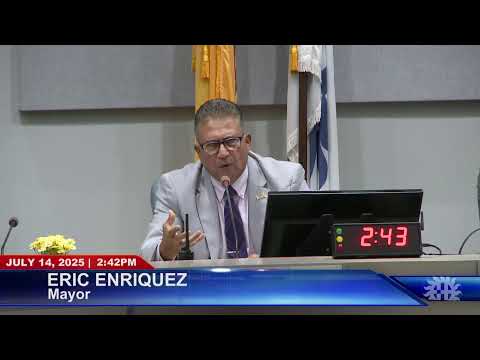
Sources and attribution: Information and quotes come from Fire Chief Mike Daniels’ presentation to the City Council; remarks and questions came from Mayor Eric Enriquez, Mayor Pro Tem Bencomo, Councilors Christine Curran, Flores, Craig, Matisse and others present at the July 14 work session. The city’s statements on timing, unit counts and budget items are those given by Daniels during the meeting.
Ending note: The council’s work session included follow-up requests for formal budget proposals and staff reports on timeline and positions; the city expects to bring staffing and apparatus requests through the FY26 budget and ICIP processes within the coming months.