Get Full Government Meeting Transcripts, Videos, & Alerts Forever!
Get email alerts on the Setback Variance 203 D Street topic
No spam. Unsubscribe anytime.
Planning board approves rear-setback variance at 203 D Street to enclose existing porch
Summary
The board approved a variance reducing the required 20-foot rear setback to 17.3 feet at 203 D Street so the owner may enclose an existing roofed porch; the board limited the approval to enclosing the existing structure and forbade additional increases to lot coverage or ISR.
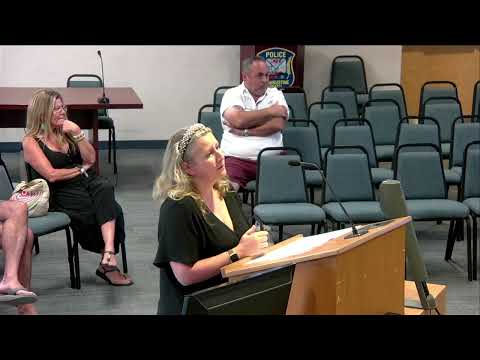
The Planning and Zoning Board voted 5–2 on July 15 to approve a variance that reduces the required 20-foot rear setback to 17.3 feet for a property at 203 D Street so the owner may enclose an existing roofed porch. Planning staff said the roofed porch and pavers were legally permitted in 2014 and inspected at that time; the applicant asked to enclose the covered area, which would not increase the building footprint or the city’s measured ISR because the roofed area already exists. Applicant Fred Wiener of 203 D Street told the board that the enclosure is intended to provide private space to assist a family member and described the personal nature of the request. Board members repeatedly debated whether a family/medical need is an appropriate hardship basis for granting a variance. Several board members said they are generally reluctant to grant variances based only on personal circumstances but that this enclosure did not increase the building footprint and would be rendered moot if the nearby alley vacation is approved. Board members also discussed lot coverage and ISR calculations. Planning staff said the lot’s current ISR and coverage are high and that the enclosure would not increase ISR because it covers an existing roofed area. One board member noted that previous variances had set precedents and urged caution about creating broad precedent for future requests. The motion that passed included language limiting the variance to enclosing only the existing roofed area and expressly prohibiting any additional paving or work that would increase ISR or lot coverage. The roll call vote recorded in the meeting minutes was: Einhauser — yes; Hogan — yes; Kinney — no; Ryan — yes; Kincaid — no; Dowling — yes; Thompson — yes. The chair announced the motion passed 5–2. Staff reminded the board that the alley-vacation process discussed earlier could obviate the need for this variance if the commission vacates the alley and the applicant’s property gains rear-yard width; staff also warned that the vacating process takes months and that the variance would allow the owner to proceed sooner if the board approved.