Get Full Government Meeting Transcripts, Videos, & Alerts Forever!
Get email alerts on the Public Transit Microtransit topic
No spam. Unsubscribe anytime.
Council adopts new transit fares and adds microtransit on evenings and Saturdays
Summary
The City Council approved a new fare schedule and an on-demand microtransit service for evenings and Saturdays as part of a reconfigured east-west route plan. Staff said the changes follow a yearlong study and will include an app-based payment option and pilot use of smaller vehicles; the vote was unanimous.
The City Council on July 15 adopted a revised fare schedule for the Lompoc Transit System and approved a new microtransit service for evenings and Saturdays intended to replace low-ridership late-night fixed-route runs.
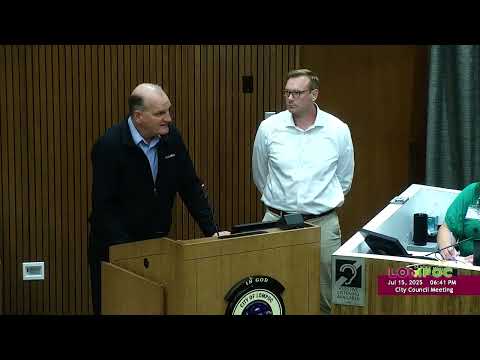
Transit and airport administrator Mister Fernbaugh told the council the city last revised fares in February 2008 and that the action follows a yearlong study to redesign routes from circular to east–west cross-town alignments. He said the city will add an app-based payment option and a microtransit service that will be corner-to-corner, not door-to-door, in the evenings (roughly 5 p.m. to 10 p.m.) and all day on Saturdays.
Under the new structure discussed at the meeting, the on-demand microtransit single trip fare was presented as $4. Councilors asked how the program would be funded and whether it would compete with local taxis; Fernbaugh said transit grants and state and federal funds are primary revenue sources for the service and that microtransit will not be door-to-door taxi service. He said the city will initially use smaller city buses for the pilot and consider smaller vehicles after the service pattern is established.
Council member Victor Vega moved to approve the resolution to set new fares and service. The motion was seconded by Council member Pauls and passed 5–0.
Councilors discussed operating cost examples: staff said the microtransit contractor’s hourly rates are approximately $80 per vehicle hour, and councilors observed that break-even ridership would be much higher than the $4 fare would cover without subsidy. Fernbaugh said microtransit is a pilot approach intended to reduce inefficient empty bus runs while maintaining service during low-demand periods; he said federal and state grants typically subsidize transit operations.
Councilors also asked about the feasibility of extending evening hours (a public commenter suggested matching bar closing times); staff said schedules can be adjusted based on demand and that the pilot will be monitored.