Get Full Government Meeting Transcripts, Videos, & Alerts Forever!
Get email alerts on the Wastewater Management topic
No spam. Unsubscribe anytime.
Fall River explores sludge‑treatment pilots, PFAS worries and regional disposal options
Summary
City utilities staff told the committee they are evaluating new sludge technologies that claim PFAS destruction, described regional disposal shortfalls cited in a recent MassDEP report, and sought regionalization conversations with neighboring systems.
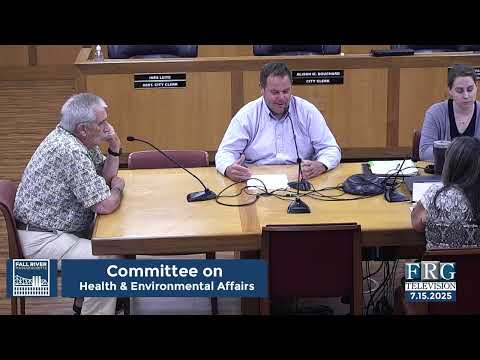
City wastewater and water staff told the City Council Committee on Health and Environmental Affairs on July 15 that sludge disposal is a growing regional challenge and that the department is evaluating new technologies, including pilots that claim to destroy PFAS.
Paul Furlan, administrator of community utilities for the City of Fall River, summarized ongoing conversations with larger regional utilities and said the market for sludge disposal is “very fluid” because of evolving regulation and science around PFAS and other emerging contaminants. “Some digesters do if they get hot enough, some don't,” he said of anaerobic digesters and other thermal technologies. He added that a company recently visited the plant to propose a pilot using a “very hot arc machine” that the vendor claims converts sludge into carbon and liquid products and “claims PFAS destruction. We're looking into it.”
Furlan said odors are a major local concern because the wastewater treatment plant is sited close to neighborhoods, which constrains options for receiving sludge from other systems on site. He said staff are talking regularly with other regional utilities, including Springfield Water and Sewer and the Narragansett Bay Commission, and that he had sent a letter to the Somerset Water and Sewer Commission about regionalization; he urged councilors to review the letter.
Citing a recent MassDEP report, Furlan said the agency indicated that “within 3 years, 7% of the facilities within this region aren't gonna have any way to put their sludge,” a finding he framed as part of a wider regional capacity shortfall.
The committee discussed staffing and public outreach. Furlan said the water treatment plant is “very well staffed” and that the wastewater plant has completed an open house that the department plans to repeat in the fall; he said the department is working to license additional laboratory staff to expand operational resilience. The open house and facility tours are intended to improve public understanding of plant operations and odor management.
No formal decision on a pilot or new disposal contract was adopted at the meeting. Furlan said siting options outside the city — including industrial areas — could allow the city to accept merchant sludge from other towns, but he emphasized that regional coordination and regulatory approvals would be necessary before any change in disposal practice.