Get Full Government Meeting Transcripts, Videos, & Alerts Forever!
Get email alerts on the Public Safety topic
No spam. Unsubscribe anytime.
Residents and fire union urge Fall River council to act on staffing after fatal apartment fire
Summary
Speakers at the City Council meeting pressed elected leaders to address long‑running firefighter and dispatcher staffing shortfalls after a recent deadly apartment fire, calling for an emergency meeting, a staffed minimum, and a short, independent review by experienced retired chiefs.
Fall River City Council members heard pleas from residents and the firefighters’ union to prioritize public‑safety staffing after a recent apartment fire that killed nine residents.
Speakers at the July 8 City Council meeting said the city has long struggled to restore staffing levels in police, fire and dispatch to earlier benchmarks and urged immediate action. Michael O’Regan, identified at the meeting as president of the firefighters’ local, said the city’s crews performed heroically but warned staffing shortfalls limited the response.
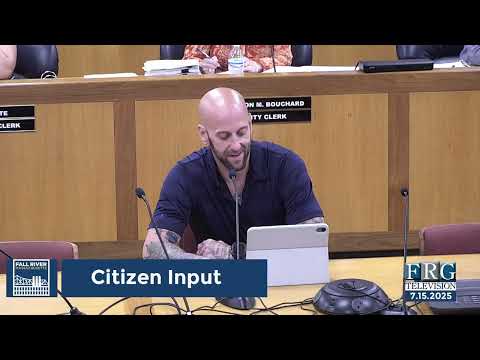
The concerns centered on the number of firefighters, police officers and dispatchers available on a daily basis and the effects of earlier layoffs and expiring grants. Resident Chris Peckham recounted staffing reductions dating to 2009 and said the city’s police and fire rosters have not recovered to historical levels. “Since 02/2009, the city of Fall River has been recklessly compromising public safety,” Peckham said during the public‑comment period.
Union president Michael O’Regan described the scene at the multiple‑fatality fire and said rescuers exhausted available manpower: “Had we had more people, the outcome may have been better. We stripped the city of every single firefighter … and every single one of those men and those women gave everything they had.” He said mutual aid and recall procedures were insufficient to replace on‑duty crews and urged the council to restore staffing that union leaders have argued is needed.
Several councilors and public commenters proposed next steps. One councilor asked that the mayor convene an emergency meeting with department chiefs to establish minimum staffing levels for police, fire and dispatch and to report back to the council. A separate speaker, who said she had discussed the issue with the mayor, recommended a short, independent review team made up of retired chiefs and experienced line officers—not current staff—to propose realistic staffing and operational changes and to report to the council in two months.
Speakers tied staffing concerns to funding sources. Witnesses and the union noted past use of the federal SAFER grant to temporarily restore firefighter positions and warned against relying on short‑term grants or one‑time federal funds (such as ARPA) rather than a sustained budgetary commitment. O’Regan and others urged the council to prioritize ongoing operating funding to keep full‑time staffing levels stable.
No formal council action or vote on staffing took place during the meeting; the discussion consisted of public comment and council members’ remarks. Councilors and the mayor’s office acknowledged the urgency and said they would coordinate with department leadership, the union and state officials to identify next steps. Councilors indicated they would consider formal requests for hearings, an emergency committee meeting, or a short independent review group to produce recommendations on minimum staffing levels and sustainable funding.
The meeting transcript shows broad agreement among speakers that additional, sustained funding and clearer staffing targets are needed; it also records differing views on whether to form a new council committee or use a short, independent review team to propose solutions. The council did not adopt any ordinance or formal appropriation related to staffing at that session.