
Allegany County staff: SNAP‑Ed funds ending will cut local nutrition programs; county seeks regional partners
Get AI-powered insights, summaries, and transcripts
Subscribe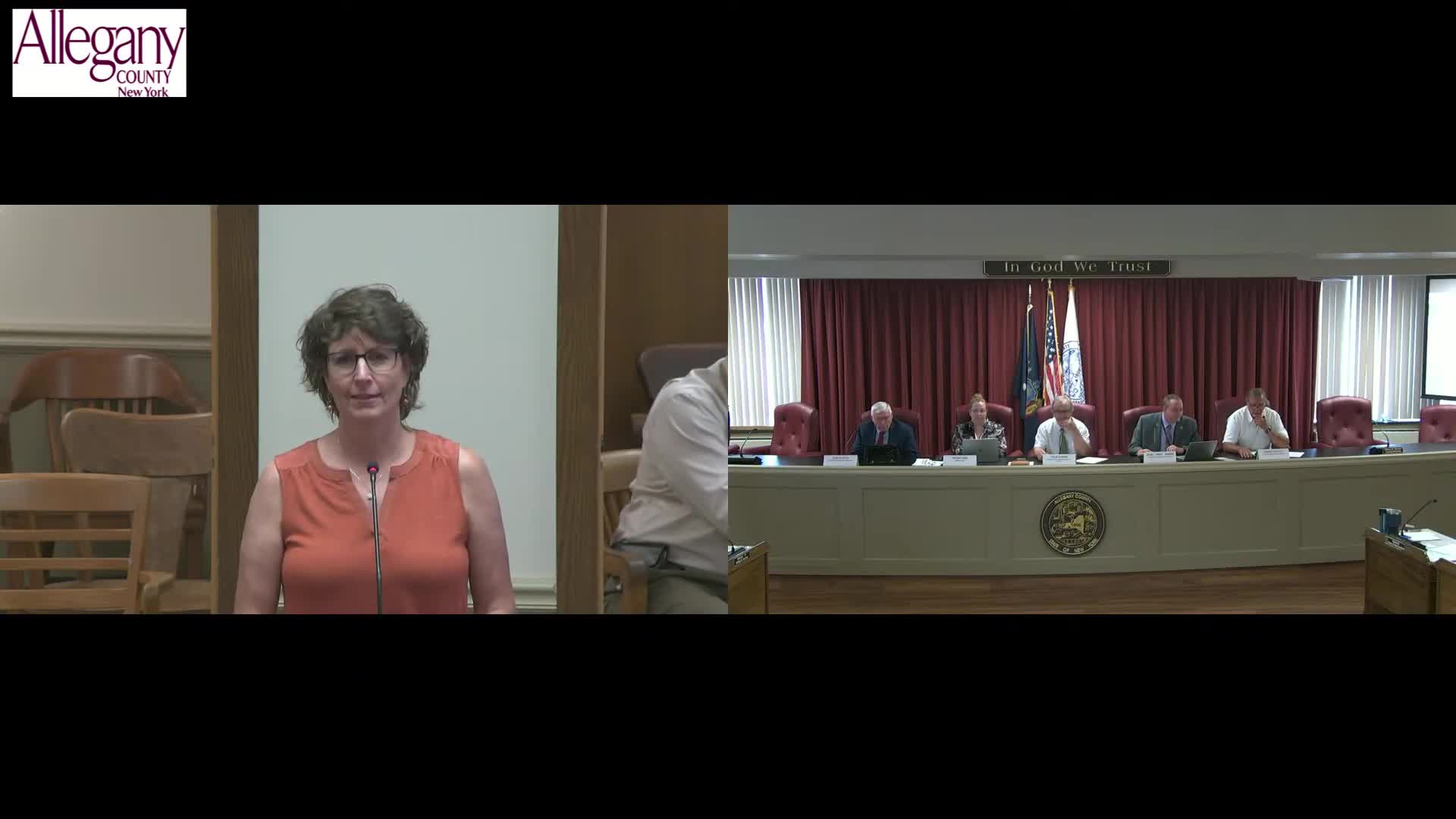
Summary
A county staff member told the Allegany County Resource Management Committee that the federal SNAP nutrition‑education program (SNAP‑Ed) is being dissolved for the county, a change that will eliminate locally run SNAP‑Ed nutrition classes and reduce staff and funding.
A county staff member told the Allegany County Resource Management Committee that the federal SNAP nutrition‑education program (SNAP‑Ed) is being dissolved for the county, a change that will eliminate locally run SNAP‑Ed nutrition classes and reduce staff and funding.
The staff member said, "We're anticipating tomorrow or Friday to to have to start making the plans to dissolve the SNAP education program," and added that the county will likely pursue partnerships with neighboring counties to sustain nutrition programming.
The announcement matters because SNAP‑Ed subsidized local nutrition and cooking classes for adults and youth, and supported part of the county office’s administrative costs. The staff member said the county currently employs nine people across nutrition programs and expects to lose two positions locally; Cattaraugus County would lose three positions and Chautauqua County four. The staff member also said the county will lose about $24,000 a year that had been covering portions of salary and administrative expenses, including utilities and copier lease.
Committee members and staff described existing local programming and possible alternatives. The staff member said the county runs a small program called Elderberries — developed in Orleans County and expanded to Allegany, Cattaraugus and Chautauqua — that offers cooking classes with a nutrition component for older residents and can be adapted to broader audiences. "So something like elderberries but expanded, I think would work well," the staff member said, noting the program is less restrictive than previous SNAP‑Ed or EFNEP grant requirements.
When asked about staffing and the fiscal impact, the staff member said, "We have nine right now. So we will be losing two positions," and explained that SNAP‑Ed funds had also covered part of the administrative salary and operating costs. The staff member said many counties are losing SNAP‑Ed funding: "Everybody is losing SNAP Ed. So this is across the nation."
Committee members asked about how new programs would be structured and funded. The staff member said the county would pursue multi‑year grants — "three to five years for the three small counties along our Pennsylvania border" — rather than one‑year awards, and that any new program would require instructors who complete training similar to the EFNEP/SNAP curricula covering diabetes, obesity and beverage choices. The staff member said previous nutrition educator positions typically required a bachelor’s degree, though some programs accepted associate‑level qualifications.
No formal motion or vote on SNAP‑Ed replacement programs was recorded during the meeting. Discussion centered on next steps: seeking partnerships with neighboring western counties (Cattaraugus and Chautauqua were named), pursuing multi‑year grant funding, and exploring contract‑based arrangements to continue some classes.
Committee members also heard brief operational updates: the county fair preparations were described as progressing well, with staff and members hoping for no weather‑related disruptions during fair week.
Budgetary specifics, grant award timelines and final plans for the two county positions were not specified at the meeting. Staff said they would be open to contracts or regional collaborations to sustain nutrition education but gave no formal deadline for decisions or an agreed implementation plan.