
Columbia County moves solid waste fund from enterprise to refuse fund; municipal cleanup and disposal rules to change
Get AI-powered insights, summaries, and transcripts
Subscribe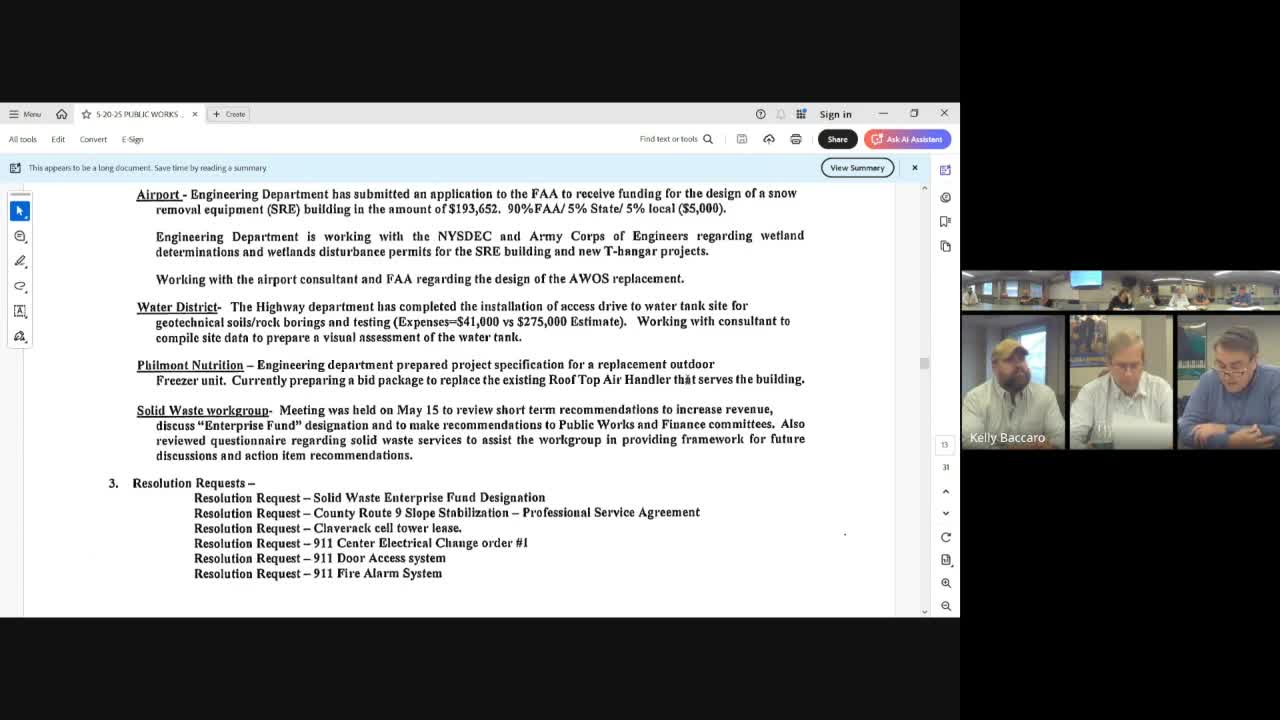
Summary
The county approved redesignating the solid waste department's accounting from an enterprise fund to a refuse and garbage special revenue fund and advanced new policies that would end routine free disposal for municipalities and change cleanup-day billing rules.
Columbia County supervisors approved a financial resolution to change the solid waste division's designation from an enterprise fund to a special revenue refuse and garbage fund, county officials said.
County staff told the Public Works Committee that solid waste operations have not been self-sustaining for many years and that the change reflects auditor recommendations from the county's annual audit to more accurately align accounting and budgeting. Staff said the new designation preserves a separate fund for tracking revenues and expenses but changes the fund classification to better match current operations.
A county work group reviewed short-term revenue recommendations and presented suggested policy changes for municipal users. The committee supported updates that would: require municipal cleanup days to follow the residential roll-off fee schedule plus overtime to cover driver weekend pay; eliminate the current municipal free-disposal allotment; require municipalities that use county disposal to purchase Columbia County solid waste bags or use the Greenport transfer station scale; and modify longstanding arrangements with the Columbia County Agricultural Society, removing $2,000 in free disposal and standardizing or negotiating new discounts.
Solid waste staff said the proposed changes are intended to move the department closer to breaking even while preserving core services. Staff also said the work group will continue to compile detailed fee projections so towns can plan in their 2026 budgets; one supervisor asked staff to provide municipality-specific estimates of how the new rules would affect each town next year. The committee noted the changes would be scheduled for implementation in the next budget year to give towns time to plan.
Discussion and next steps: the work group will continue analysis and provide town-level fee projections; supervisors said changes are meant to be phased to allow municipal budget planning. The committee approved the fund redesignation resolution and the policy recommendations as committee actions to advance to finance and subsequent budgeting steps.