
Kankakee opens public hearing on $38.79M fiscal budget; committee flags ambulance revenue, neighborhood-stabilization and animal-control placeholder
Get AI-powered insights, summaries, and transcripts
Sign Up Free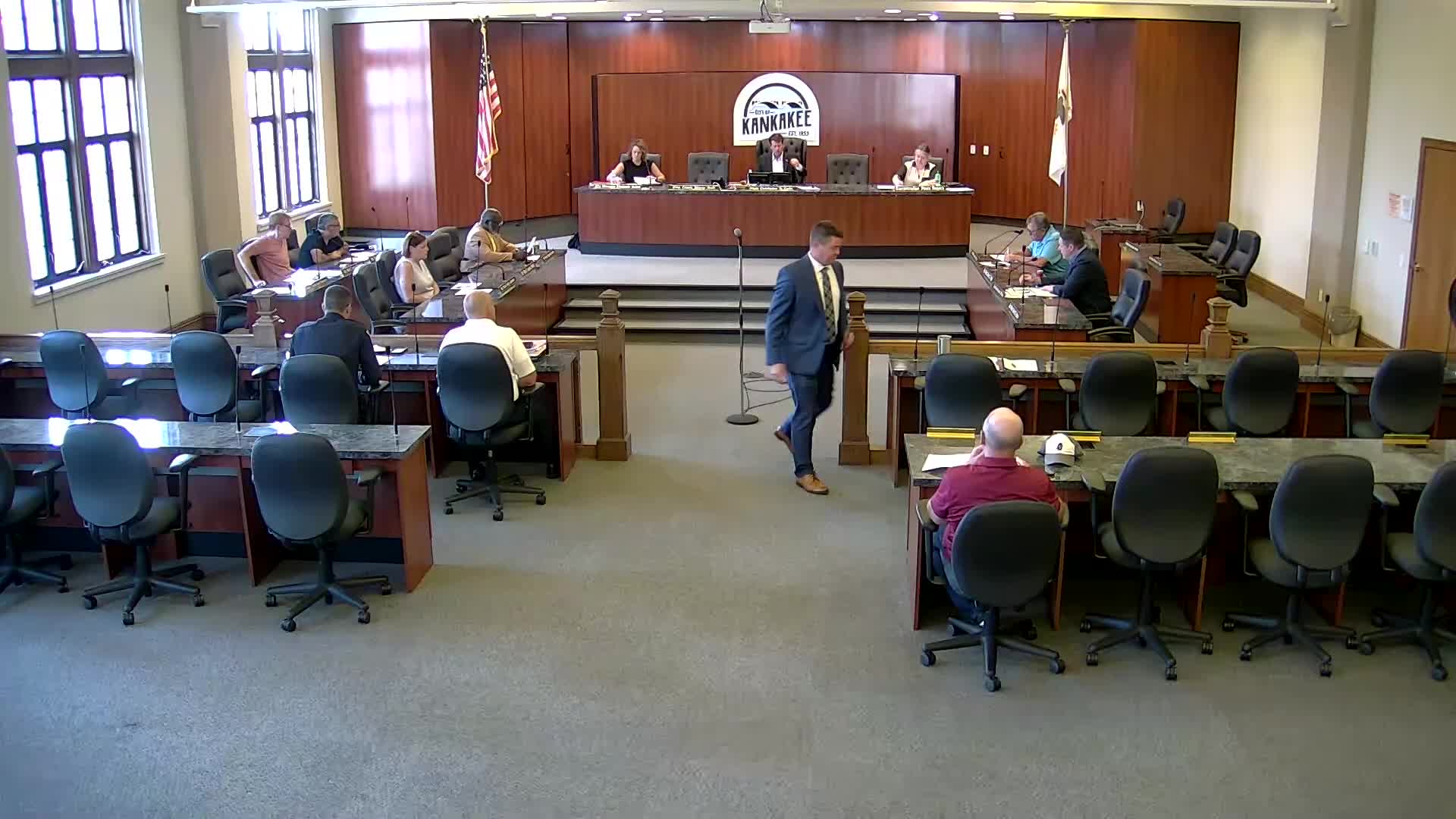
Summary
At the July meeting the budget committee opened and closed a public hearing on the FY 2024–25 budget, reviewed a $38.79 million spending plan with a projected $114,641 surplus, and discussed revenue assumptions and program line items including ambulance fees, a neighborhood stabilization pilot and a proposed animal-control contract.
KANKAKEE, Ill. — The City of Kankakee budget committee opened a public hearing July on the proposed fiscal 2024–25 budget and then reviewed department-level revenue and expense projections, a proposed $38,793,003 revenue plan and $38,006,362 in expenses that produce a projected surplus of about $114,641. Comptroller Paula Rogers and City Manager Elizabeth walked the committee through the revenue assumptions and departmental expense lines. The city’s budget team described conservative revenue assumptions for items that have historically fluctuated — notably corporate replacement taxes and state income tax receipts — while projecting increased ambulance revenue and higher interest income on city cash balances. Key items discussed - Ambulance revenue: The budget assumes higher ambulance fee revenues. Chief LaRoche told the committee the department is “trending up” on run volume and said, “we’ve brought in 4.4 already this year,” a figure staff said exceeds the budgeted amount and supports a $400,000 fee-line increase (the city’s FY25 ambulance actuals were higher than the proposed budget). The department indicated plans to add a third ambulance in the coming months to cover rising call volume. - Neighborhood stabilization and demolition: Staff proposed reviving a neighborhood stabilization program. The draft budget keeps $50,000 for initial staffing contingency (reduced from a $100,000 placeholder) and includes a $100,000 demo line to allow the city to remove blighted structures when grants or ECDA funds are not available. The mayor described a $25,000 owner-occupied property-improvement incentive program (up to $500 per household) to encourage facade and minor repairs; staff said $25,000 would cover roughly 50 homes. - Animal-control placeholder: The city manager said a $35,000 placeholder for an animal-control contract was included so the council can decide whether to contract animal-control services; the manager said the contract would relieve police and code officers of many animal calls but would not cover wildlife removal in private yards unless the animal was sick or dangerous. - Convention-center renovation: Committee members asked where convention-center renovation funding would come from; staff said TIF 8 would be the source. Comptroller Rogers emphasized that some grant revenues listed are recurring grants (for example, certain police grants) but are not guaranteed until awarded; staff said they budgeted conservatively and that if a grant does not materialize the $230,000 grants total is manageable within the overall fund. Other budget notes: staff increased projected interest income because the city’s money-market balances have earned more interest; liability and health-insurance costs increased; citywide capital funding from internal sources was reduced and the budget keeps a conservative $200,000 capital allocation. The manager said the city prefers conservative revenue budgeting and expects departments to continue controlling expenditures. Public hearing and next steps: the committee opened and closed the public hearing (no public speakers) and will continue budget deliberations; the budget will be forwarded to the council for final consideration under the city’s normal ordinance process.