Get Full Government Meeting Transcripts, Videos, & Alerts Forever!
Get email alerts on the Animal Welfare topic
No spam. Unsubscribe anytime.
Clinton County Legislature deadlocks 5-5 on motion to advertise public hearing on proposed dog-tethering law
Summary
After extended public comment and committee debate, the legislature voted 5-5 on Resolution 402 to advertise a public hearing on Local Law No. 1 of 2025 (regulating outdoor restraint of dogs); the tie meant the motion failed.
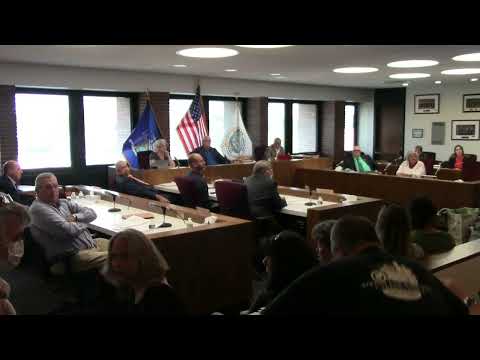
The Clinton County Legislature on June 11 voted to a 5-5 tie on a motion to advertise a public hearing for Local Law No. 1 of 2025, a proposed law that would restrict continuous outdoor tethering of dogs in the county. The motion to advertise the hearing (Resolution 402) was moved by Legislator Alicia Hall and seconded by Legislator Alicia Malloy; a roll-call vote produced a 5-5 split and the measure did not advance.
Supporters of the proposed law used the public-comment period to press the legislature for a public hearing and broader review. Dr. Kendra Bradley Durant described her service dog’s history and argued prolonged tethering was inhumane, saying, “A 24-hour tether ban isn’t regulatory overreach… It regulates harmful conditions and bans suffering.” Jennifer Jewett, a retired Air Force member, told the legislature she and local organizers had worked since December 2023 to draft a countywide law and asked members to “give the people of Clinton County a public hearing.” Ben Martin, a resident of Plattsburgh, urged the legislature to “let the people speak” by holding the hearing.
Legislators who opposed advertising a public hearing said the issue had been thoroughly examined in prior committee meetings and should be decided at the town level rather than by countywide law. Legislator Periade (Perrier) said that after “over a year and three meetings” he believed further public hearings would not add information and that he had contacted the town boards he represents, which had expressed opposition. Similar remarks were made by other legislators who said town governments and town dog control officers are better positioned to adopt local rules.
The proposed local law appears in the meeting as “Local Law No. 1 of 2025, titled regulating the outdoor restraint of dogs in Clinton County.” Supporters said the draft includes provisions such as requiring an owner to be present when a dog is tethered so the owner can supervise the animal’s safety and public safety; that specific provision was described in public comment as intended to reduce risks if a tethered dog becomes entangled or breaks loose. Speakers referenced research and national organizations (Cornell University, the CDC, and the ASPCA) in arguing that prolonged tethering harms dogs’ physical and psychological well-being.
During floor debate, legislators who favored a public hearing framed the vote narrowly as granting residents the opportunity to speak and provide input, not as final approval of the law. Legislator Hall said the motion was “strictly telling these people… that they have a right to be heard.” Opponents reiterated that some towns have already drafted or adopted their own rules and that a countywide law could create confusion.
The roll-call record in the transcript names several legislators and their votes during the Resolution 402 roll call: Legislator Castine voted yes; Legislator Periade (Perrier) voted no; Legislator Henry voted no; Legislator Bezayo voted no; Legislator Randall voted no; Legislator Baldrige voted yes; Legislator Lemoine voted yes; Legislator Paul voted yes. The transcript and chair’s comments indicate the final roll call produced a 5-5 tie. Because the motion failed to achieve a majority, the legislature did not direct the clerk to advertise a public hearing on the draft local law at this session.
The exchange highlighted split views about where authority to regulate dog tethering should reside (town versus county) and whether further public hearings would yield new information; it also underscored a sustained advocacy effort by residents who have worked on the draft since late 2023. The matter may be raised again in future sessions or pursued by individual town boards.