Get Full Government Meeting Transcripts, Videos, & Alerts Forever!
Get email alerts on the Syringe Services Program topic
No spam. Unsubscribe anytime.
Lewiston councilors split over 1‑for‑1 needle exchange rule as staff seeks zoning, mobile‑unit clarity
Summary
City staff held a workshop on a proposed syringe services program ordinance, with councilors sharply divided over a strict 1‑for‑1 needle return rule, zoning buffers, mobile unit licensing and provider limits. Staff will send zoning questions to the planning board and return with revised language.
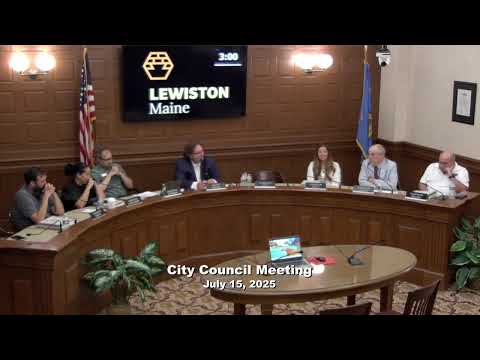
Lewiston city staff and councilors debated operational and zoning rules for a proposed syringe services program ordinance at a July 8 workshop, with council members sharply split over whether to require a strict 1‑for‑1 exchange of needles.
The ordinance as drafted would require providers to exchange one clean syringe for every used syringe a participant returns. Director Connor told the council the draft’s “strict 1 to 1 requirement for all SSP providers” has drawn pushback from providers and public‑health partners, and staff presented several options: keep the 1‑for‑1 rule, remove it, or add a limited carve‑out for new enrollees.
Why it matters: Councilors said the rule affects public health, litter, and whether providers can operate efficiently. Several policy questions — where brick‑and‑mortar programs may locate, whether mobile exchanges should be allowed and how many provider licenses the city should permit — remained unresolved and will affect how the city regulates and inspects programs.
Division over 1‑for‑1 rule Councilor Herrmann said the clinical details should be left to health authorities and backed removing a strict 1‑for‑1 requirement: “I would go with number 3. No restriction on, on the 1 to 1 ratio.” Councilor Glenn said he favors the exchange rule with limits: “I’m 1 for 1,” and recommended a cap so people returning 100 needles would not be handed 100 in turn. Councilor Longchamps urged a starter kit for new participants — “10 to 20 needles” — and said if someone brings 10 in, they should receive 10.
Councilor Sowell said one reason proponents press for 1‑for‑1 is litter reduction: “the reason for the 1 to 1 mostly is for the litter.” Councilor Hammond disputed a simple link between a 1‑for‑1 rule and litter, and urged the council not to ignore clinical best practices when drafting public‑health rules.
Zoning, mobile units and licensing Staff presented a revised map showing where the city would permit brick‑and‑mortar SSP sites and where the draft proposed buffers around schools and day cares. Director Connor said permitted zones would include neighborhood business, community business, highway business, industrial and urban enterprise districts. The planning board has not yet reviewed the map; multiple councilors asked that the board weigh in.
Mobile exchange rules drew detailed debate. Staff said current draft language would prohibit mobile units; the council discussed three options: continue the ban, allow mobile units as their own license, or permit mobile units but require them to be licensed by the city and tied to a local brick‑and‑mortar operator. Several councilors said they would accept mobile units if they were licensed and limited to a published schedule and private property, not parked on public streets or in parks.
Number of providers and license structure The initial draft limited provider licenses to two. Councilors split: some supported a limit (one or two) to avoid duplication; others favored no cap and said strict licensing standards should manage quality. Councilors and staff discussed whether a license should attach to a location (each brick‑and‑mortar site) and whether mobile units should require a separate permit or be covered as an extension of an operator’s license. Staff said the city attorney’s revised draft would allow a brick‑and‑mortar license to include an approved mobile unit via permit; separate satellite locations would require separate licenses.
Good‑neighbor policies and fees Councilors suggested providers submit a written “good neighbor policy” that addresses topics the city requests (calls for service, needle pickup, behavior around the facility) rather than prescribing precise items in ordinance text. The council asked staff to return with a template or suggested topics they expect providers to address.
On licensing fees, providers told staff their budgets are tight and asked for low or no fees. Councilors generally agreed a modest application fee that covers city review costs would be reasonable; staff said they would research comparable fees in other municipalities and report back.
What happens next Staff will bring the zoning map and buffer questions to the planning board for review before the council takes final action. Councilors signaled no clear majority on the 1‑for‑1 rule and asked staff to return with draft ordinance language that reflects the range of options discussed — including a possible carve‑out tied to measurable return rates — and the planning board’s zoning input.
Ending note: Councilors repeatedly emphasized the need to follow best practices and to avoid overstepping clinical decisions that fall to public‑health authorities. Several councilors urged staff to coordinate with the Maine CDC and local providers as draft language is revised.