Get Full Government Meeting Transcripts, Videos, & Alerts Forever!
Get email alerts on the Opioid Settlement Fund Process topic
No spam. Unsubscribe anytime.
Houston County panel adopts standard application template, defers final contract approval to county attorney and commission
Summary
An advisory committee agreed to require a uniform application and a contract template for distributing opioid-settlement funds, but final contract language and disbursement rules (reimbursement vs. partial upfront payments) will await county attorney review and county commission approval.
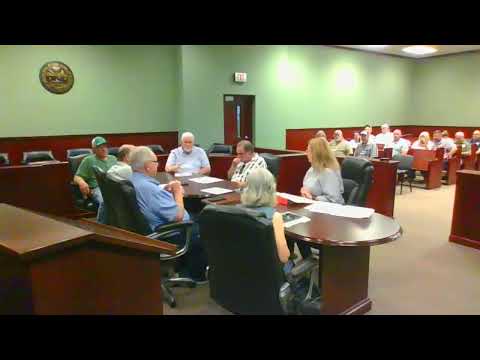
Houston County Opioid Settlement Advisory Committee members agreed on the need for a uniform application and a sample contract to guide distribution of the county's opioid-settlement funds but deferred final approval to the county attorney and the County Commission. "This is what the state recommends. We don't have to use this, but I would strongly suggest we do something or this or something similar," Committee member 1 said, referring to the state-recommended application template. Committee member 2 added: "It is it's it is it's asking for a lot of detailed information, but I believe when we're talking about the amount of money that some might be requesting that we we need all of those details." The committee's discussion centered on two linked documents: a uniform application form (to standardize requests) and a sample contract (to spell out reporting, budgeting and termination provisions). Committee members said the application would ask organizations for a project description, objectives, partnerships, expected outcomes, a project timeline, a budget and how they will measure success. The draft contract includes the right to require quarterly or monthly reporting, to terminate the agreement for noncompliance and to require receipts and budget documentation. Committee members debated disbursement methods. One proposal discussed repeatedly would pay one-third of approved funds up front and the remainder by reimbursement on receipt of documented expenses. Other committee members favored full reimbursement with receipts. "I made a note on the reimbursement model and, to look at a possible, like, doing the 1 the 1 third take 1 third upfront and then reimbursement after that," Committee member 1 said. Members also emphasized compliance with the settlement exhibits. Committee member 1 warned of a potential clawback if funds are spent outside the parameters of the settlement: "There are requirements for the funds, and we have to make sure that we meet those requirements. Because if not, there could be a bit of a clawback." Because the advisory committee is not the final approving body, members agreed applicants must submit the standardized application to the mayor's office or the committee, which will then forward recommendations to the County Commission. Committee members said they will wait for the county attorney's review of the sample contract before a final internal decision and expect any funding approvals to go to the County Commission for formal action. The group discussed a possible review and approval timeline aimed at the September commission cycle but did not set a binding date. Next steps called for: (1) distributing the state-recommended sample application to prospective applicants; (2) circulating the sample contract template to the county attorney for review; (3) specifying whether monthly or quarterly reporting will be required; and (4) instructing applicants that reimbursements must be documented with receipts. Committee members said applicants already discussing projects locally should complete the application and return it to the mayor's office or the committee for the advisory recommendation to the County Commission.