Get Full Government Meeting Transcripts, Videos, & Alerts Forever!
Get email alerts on the Law Department Code Enforcement topic
No spam. Unsubscribe anytime.
City law department reports lower outside-counsel use; council hears concerns about administrative-review board and code-enforcement liens
Summary
City attorneys said more litigation is being handled in-house and provided settlement and revenue figures; council members raised concerns about the administrative interim review board for code enforcement after procedural shifts following a court ruling.
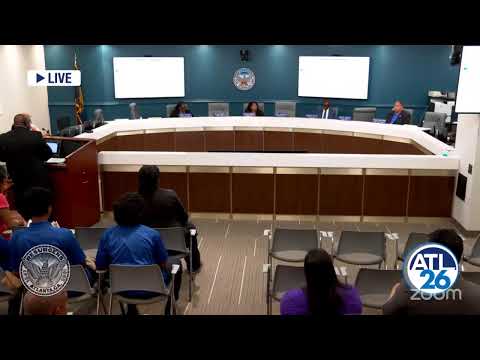
City Attorney Patrice Perkins and senior deputies briefed the committee on the Department of Law’s third-quarter activities on July 14, reporting a decrease in outside-counsel reliance, a steady claims workload and an accounting of recent settlements that the committee approved on the consent agenda. Council members pressed staff about code-enforcement processes, the status of the administrative interim review board and the legal effect of recent court rulings.
Perkins said the department had shifted more cases in-house and that, as of the report period, roughly half of open litigation matters were being handled by city attorneys rather than outside counsel. “Of the 3 hun 287 cases that we had open as of that period in time, a 151 of them were being handled in house,” she said, and added that the department closed and settled multiple litigation matters during the period.
The committee approved several settlement resolutions on the consent agenda that Perkins’ staff had presented. The items recorded in the meeting packet included settlements for civil cases with amounts charged to city accounts as follows: Eunji Lee — $80,351.67; Lavonda Thompson and Delvin Bayard — $125,000.00; Nashan Tarik — $130,000.00; Dominic Bridges — $14,000.00; Susan Solomon — $20,000.00; Tara Johnson and Tamisha Sanders — $50,000.00; and Progressive Premier Insurance Company (subrogation of Melina Hicks) — $2,618.95.
Perkins and deputies also described administrative and collection work: the department collected $64,568.54 in lien and tax-related recoveries during the quarter and handled hundreds of incoming claims. Perkins said the department was prioritizing in-house work where feasible because outside counsel remains expensive: “This increase of 9% [in outside-counsel spending] is a result of all of the increased unforeseen litigation that occurred during last summer to this May,” she said.
A separate portion of the meeting focused on code-enforcement remedies and the administrative interim review board. Perkins explained that a Georgia Court of Appeals decision — cited as Flat Rock Falls LLC v. Labatt — limited the legal priority and collectability of some administrative liens created under the prior “administrative” process. As a result, the law department and municipal court have shifted many blight and demolition-lien cases into judicial proceedings to create a stronger legal path for collection and enforcement.
Daphne Talley of Code Enforcement told the committee the administrative interim review board has nine appointed members but has not convened recently because staff have focused on a set of judicial filings. Several council members said some board appointees were surprised to learn the board’s workload had been curtailed and urged staff to either reconvene the board on a quarterly basis or to formally dissolve it if it would not be used.
Council Member Mary Norwood asked whether a property’s homestead exemption status could be used as a factor in enforcement and lien decisions; law department staff said they would investigate whether that legal distinction could be used as part of a reasonable, defensible approach. Perkins said the office had worked with municipal court and code enforcement to begin judicial filings and that more cases would be filed in the coming days.
Why it matters: The shift from administrative to judicial procedures reflects a legal response to a Court of Appeals ruling, affects how the city pursues liens and demolitions and prompted concerns about board member notification and involvement.
What’s next: Law staff said they would provide council members further briefings on the effect of recent case law, review options to protect homeowners with homestead exemptions and follow up on the administrative board’s status and communications with appointees.