Get Full Government Meeting Transcripts, Videos, & Alerts Forever!
Get email alerts on the Oversight Acrb Mou topic
No spam. Unsubscribe anytime.
Atlanta Citizens Review Board and APD finalize MOU changes to tighten notifications and training access
Summary
An updated memorandum of understanding narrows notification windows to 24 hours, adds serious bodily injury and firearm discharges to ACRB review, and calls for joint implementation and training integration into APD SOPs.
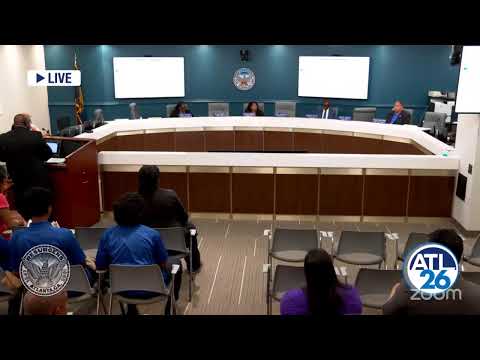
The Atlanta Citizens Review Board (ACRB) and the Atlanta Police Department presented a revised memorandum of understanding to the Public Safety and Legal Administration Committee on July 14 that tightens notification timelines, expands the category of incidents the board may review and calls for training and Standard Operating Procedure integration.
Lee Reid, executive director of the Atlanta Citizens Review Board, described the document as “a living document” developed over several months with input from the board, the mayor’s strategic team and APD. Reid said the MOU now explicitly covers shootings, deaths in custody, “serious bodily injury in custody” and firearm discharges.
The revised service-level commitments reduce APD’s notification time to the ACRB from 48 hours to 24 hours and require APD to provide “a written explanation” when discipline imposed by the department is greater or lesser than the ACRB’s recommendation. The MOU also calls for ACRB members to participate in the Citizen Police Academy as part of orientation and for APD to incorporate the MOU into relevant SOPs and training.
“We believe that it should not be an issue,” Reid said of the 24-hour notification standard, and he recommended implementation meetings to align stakeholders and integrate the MOU into existing APD procedures. ACRB secretary Adrienne Proler said the document “was not created in a small closed meeting. It’s a result of a lot of hard work” and credited the mayor’s office staff for assistance.
Council members asked clarifying questions about scope, timelines and issue-resolution steps. Council Member Isha Collins asked for clearer wording on how “serious bodily injury” cases would be handled when a signed complaint is not present; Reid said the MOU was designed to allow ACRB to initiate review when serious injury occurs even without a citizen-filed complaint, and to clarify which matters remain under ordinary complaint processes.
Council Member Antonio Lewis asked whether the MOU would prevent mismatches between information provided to the public and records disclosed through open-records requests; Reid said that is the MOU’s intent and that implementation and follow-through would be necessary to prevent future discrepancies.
No formal council vote on the MOU occurred at the committee meeting. Reid said the board had secured necessary feedback and was prepared to proceed: “We are ready to move forward now,” he said. Committee Chair Andrea Boone asked Reid to circulate the MOU to all council members for further review and any suggested changes.
Why it matters: The MOU revisions raise the speed and transparency of civilian oversight for the city’s most serious use-of-force incidents, create a clearer pathway for joint training and make the review process more consistent with APD procedures.
What’s next: ACRB leadership will circulate the revised MOU to council members for comment and implementation meetings are planned to align APD SOPs and training with the MOU’s requirements.