Get Full Government Meeting Transcripts, Videos, & Alerts Forever!
Get email alerts on the Water Billing Appeals topic
No spam. Unsubscribe anytime.
Water and Sewer appeals board urges code changes as resident details suspected billing fraud
Summary
The Water and Sewer Appeals Board told the City Utilities Committee it wants code changes to allow broader billing adjustments and better customer materials; a Vine City resident told the committee she is experiencing suspected identity-theft billing and asked the city to investigate.
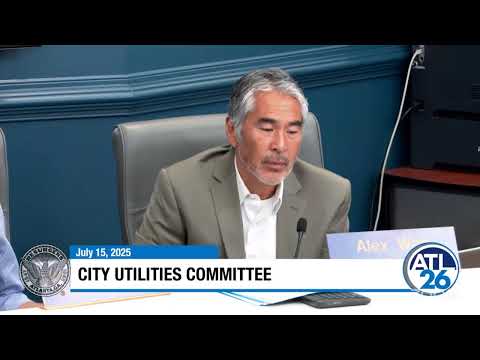
A resident and the city’s Water and Sewer Appeals Board pressed the City Utilities Committee on July 15 for clearer billing rules and more help for customers who receive unexpectedly large or duplicate utility bills. Helen Delilah Williams, a Vine City resident, told the committee she believes someone has transferred unpaid charges to her address and said she has been taking cold showers for months while the billing problem continues. “Please help me,” Williams said, giving her address as 642 Lester Street and saying she had filed an identity-theft report with the City of Atlanta.
The appeals board presented data from three years of hearings and recommended several changes to how the city handles customer adjustments, arguing the current code limits the board’s ability to fix bills in extraordinary circumstances. Roseanne Maltese, chair of the Water and Sewer Appeals Board, told the committee that appeals currently allow at most two adjustments, and that adjustments are typically limited to one month’s consumption measured in CCFs. The board recommended: (1) revising the lookback used to detect a one-time spike to 12 months with a six-month follow-up window; (2) requiring leak-detection or plumber verification before an adjustment; (3) clarifying city code to permit adjustments in circumstances not currently covered; and (4) filling three vacancies so the board reaches the seven members required by code.
Why it matters: Customers have limited avenues to correct large bills, and the board said unclear rules and inconsistent guidance from departments and the law office leave residents frustrated. Board members and council members said clearer guidance, an improved appeal acknowledgment letter and an FAQ would help set expectations and reduce repeat appeals.
Board members outlined how the hearings work: staff introduce the case, the board reads the account history, board members ask questions, the customer presents, then the board deliberates and issues a decision in person and by letter. Earl Young and Derek George, who serve on the board, said common issues include undisclosed leaks, late-arriving evidence, and customers believing a spike is unexplained even after an inspection.
Council members asked procedural questions and pledged to help fill board vacancies and to consider the board’s recommended change from an eight-year term limit to a nine-year practice the board prefers so experienced volunteers can continue until replacements are ready. The appeals board also proposed working directly with Department of Watershed Management leadership and the law department to draft code amendments and improve the appeals acknowledgement letter and community outreach.
The resident who spoke during public comment, Williams, described long-running billing confusion that she said began in 2009, duplicate bills arriving at her household and an unsolicited curbside container appearing at her address. She asked staff member Mister Hughes and the committee to investigate and to contact her representative on the issue.
The committee did not take a formal vote tied to the board’s recommendations during the meeting; members asked the board to provide a packet of proposed code language and said they would follow up on filling vacancies and on enhanced outreach and FAQ materials.
Ending: The appeals board said it will deliver proposed code edits and a redlined packet to the committee. Committee members said they would follow up with the Department of Watershed Management and the law department to pursue the board’s recommendations and to fill the vacant seats so the board can operate at full capacity.