Get Full Government Meeting Transcripts, Videos, & Alerts Forever!
Get email alerts on the Supportive Housing Coordination topic
No spam. Unsubscribe anytime.
Commissioners debate whether landlords or community partners should provide care coordination for supportive housing
Summary
The board discussed funding a Tenants to Homeowners position to provide on-site supportive housing coordination, heard competing views about best practice separation of landlord and care roles, and held the item for further review; some commissioners favored short-term funding while the commission pursues a systems-level solution.
Douglas County commissioners spent substantial time Tuesday debating how to staff supportive housing so that residents get care without landlords acting as direct case managers.
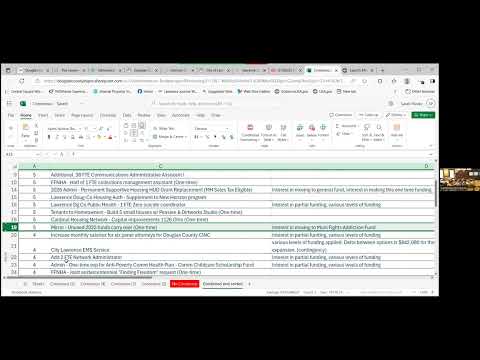
The request on the table was funding for a Tenants to Homeowners supportive-housing coordinator position intended to liaise between landlords, tenants and care providers for a set of recently built units. Commissioners and staff described the role as distinct from intensive case management: staff said it would perform landlord-oriented housing coordination (maintenance orders, tenancy supports, communications with service providers) rather than mental-health clinical case management.
Commissioners expressed three recurring concerns: (1) best practice typically separates the landlord function from clinical case management, (2) there is not yet a single, high-functioning mobile or assertive community team available to do intensive 24/7 response in the county, and (3) tenants-to-homeowners is a property manager with evolving service capacity, creating ambiguity about who should fill the coordination gap. Several commissioners favored interim or one-time funding while staff and partners design a durable system-level approach; others favored fully funding the position to avoid disrupting housing stability for tenants.
Family Promise separately sought funding for direct case-management positions for families expected to occupy new units; commissioners distinguished that role as more intensive family case management rather than the landlord liaison position Tenants to Homeowners requested.
The commission did not finalize the Tenants to Homeowners request; staff were directed to hold the item and return with options for one-time funding, a service agreement template, or alternative models (a dedicated mobile response or centralized care coordination agency) to ensure tenants retain housing while the system is reworked.
Commissioners stressed they wanted a solution that preserves tenant protections while ensuring adequate on-call supports for housing providers and clients alike.