Get Full Government Meeting Transcripts, Videos, & Alerts Forever!
Get email alerts on the Mexican Wolf Management topic
No spam. Unsubscribe anytime.
Cochise County supervisors direct revisions to Mexican wolf resolution, seek sheriff reports and training
Summary
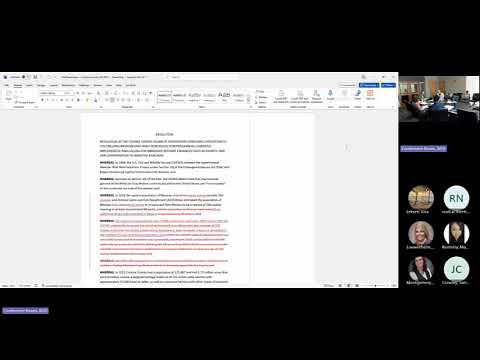
On Tuesday, July 15, the Cochise County Board of Supervisors reviewed a final draft of a resolution on Mexican wolf management and directed county staff to revise language to require sheriff-level reporting, pursue a memorandum of understanding with federal and state wildlife agencies, and consider funding training for ranch-patrol personnel.
On Tuesday, July 15, the Cochise County Board of Supervisors reviewed a final draft of a resolution on Mexican wolf management and directed county staff to revise language to require sheriff-level reporting, pursue a memorandum of understanding with the U.S. Fish and Wildlife Service and the Arizona Game and Fish Department, and consider funding training for local ranch-patrol personnel. Supervisors also asked staff to schedule a separate work session to review the updated draft and to place the resolution on the board agenda for a vote the following week.
The board sought changes that would preserve the proposal’s intent while avoiding legal overreach. Dylan Hendel, an attorney in the civil division of the Cochise County Attorney’s Office, said his office “doesn’t make substantive changes unless we believe that a legal change is necessary,” and that his recommended legal edit clarifies federalism principles under the Endangered Species Act and states that the county would enter a memorandum of understanding with the Fish and Wildlife Service and Game and Fish. Hendel said he removed language using the word “investigate” in favor of narrower wording after conferring with the county attorney’s office.
Supervisor Crosby said the board needs a way to record incidents so the county would have evidence if it ever pursued litigation or reimbursement. “I want them to be able to investigate it and form a report that then would be filed with us, the board or with the county attorney’s office as a record of that investigation just like any other investigation,” Crosby said. Crosby also proposed funding training for two ranch-patrol members so they could gather higher-quality evidence of livestock losses and other wildlife incidents.
Supervisors discussed entering an existing regional memorandum of understanding that some eastern Arizona counties have with Game and Fish and the Fish and Wildlife Service. Hendel said entering an MOU “would obviate some of the concerns that we’re having” by setting procedures and timelines, for example on how soon state or federal agents would respond to a reported kill.
Board members noted locally based field capacity is important. One supervisor requested that the resolution ask for a Fish and Game or Fish and Wildlife staff presence in Wilcox rather than response from Phoenix, to shorten response times. The board also discussed asking that Game and Fish be required to retrieve an animal or otherwise act within a limited period after notification; Hendel said language could encourage expedited removal but must be drafted to avoid conflict with federal law.
ECHO, a local organization referenced in the meeting, has offered $25,000 to the ranch patrol to help with credentialing; supervisors discussed that the county could supplement training costs and administrative expenses so local deputies can produce reports usable for county records. The draft resolution as discussed would require the sheriff to compile incident reports for the board’s records; Hendel said he would change wording to ensure the legal distinction between “reporting” and “investigating.”
Supervisors also directed staff to include language that: expresses interest in the MOU; commits consideration of additional sheriff resources and training; requires the sheriff to compile and deliver incident reports to the board; and, where requested by supervisors, references federal constitutional protections mentioned during the session (Fifth and Fourteenth Amendments) and state constitutional provisions that members asked staff to compare. The draft also includes a “be it resolved” clause supporting the Enhancing Safety for Animals Act of 2025 and asking that any delisting language be phrased as “delist” rather than “defund,” per a supervisor’s direction.
Procedurally, the board agreed to a separate, 30-minute work session Thursday to review the revised draft before placing the resolution on a board meeting agenda the following Tuesday. Laura (county clerk), who participated in the discussion about scheduling, advised staff on posting timelines and said the item could be posted in time for the Thursday work session and subsequent agenda posting.
No formal vote on the resolution was taken during the July 15 work session. The board’s actions at the session were limited to directing staff to revise the draft, pursue the MOU language, consider training funding, require compilation of sheriff reports for county records, and schedule the follow-up work session and vote.