Lifetime Citizen Portal Access — AI Briefings, Alerts & Unlimited Follows
House hearing flags VA workforce losses, coordination gaps in community care program
Loading...
Summary
A House Veterans' Affairs subcommittee hearing focused on large VA workforce declines, uneven coordination between VA and community providers, and incomplete implementation of oversight recommendations for the VA community care program.
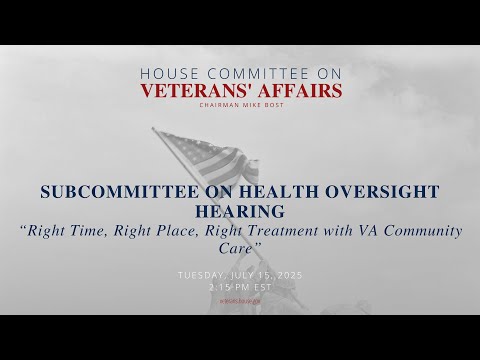
House lawmakers and veterans' advocates said at a June oversight hearing that large staff losses at the Veterans Health Administration and inconsistent coordination with outside providers are reducing timely access to specialty care for veterans.
The subcommittee's chairwoman, Representative Mariannette Miller-Meeks, emphasized the role of community providers in expanding access under the Mission Act while warning that the VA must remain responsive: “Through the Mission Act, Congress has closed the gap that was crippling the delivery of care by the VA,” she said.
Ranking Member Julia Brownlee countered that recent policies and personnel changes at the VA have made it a less desirable place to work and are already constricting access. Brownlee told the panel that the VA expects to lose nearly 30,000 employees by Sept. 30 through voluntary separations and buyouts and that ‘‘these losses will continue to grow,’’ a trend she said will harm both VA and community care coordination.
Nut graf: Lawmakers and witnesses told the Subcommittee on Health that community care — intended to supplement VA capacity where necessary — is being strained by workforce attrition inside VA, inconsistent referral coordination, and incomplete follow-through on oversight recommendations from the Government Accountability Office.
Subcommittee members and witnesses recounted several patterns they said are reducing access to care. Witnesses described delays and unclear referral responsibility between VA patient-aligned care teams and community providers; the GAO has issued multiple recommendations to improve the program and, according to testimony, only a portion have been fully implemented. Dr. Megan Mobbs, director of the Center for American Safety and Security at Independent Women's Forum, told lawmakers that "community care provides nearly 40% of all VA-delivered care, and it's working," while also urging stronger accountability and data collection.
Witnesses and members discussed VA staffing statistics presented at the hearing: as of May 31, 2025, about 22,000 employees had separated from Veterans Health Administration functions in the current fiscal year, and VHA had a net shortfall of roughly 10,310 more separations than hires in the same period, according to materials cited by Ranking Member Brownlee.
Lawmakers also pressed witnesses on the need for better data and electronic record sharing between VA and community providers. Several witnesses said community clinicians are not consistently required to return complete course-of-care documentation to VA care teams, creating delays and repeated patient interviews. Representative Andy King-Hines and others asked for more robust performance metrics tied to scheduling and referral coordination; Dr. Mobbs and other witnesses pointed to GAO work as a basis for legislative fixes.
Members of Congress on both sides repeatedly framed the problem as requiring a dual approach: preserve and strengthen direct VA care while improving and standardizing community care coordination. Chairwoman Miller-Meeks said she supports both tools, and members urged the VA to publish clearer standards for community-provider training, timely reporting of appointments, and better electronic health record interoperability.
The subcommittee expressed concern that no VA officials attended the hearing to answer questions about implementation. Ranking Member Brownlee asked that the department be invited to future oversight hearings so officials can respond directly to the barriers described by witnesses.
Ending: Lawmakers did not vote on legislation at the hearing; members and witnesses urged corrective steps including improved staffing retention, clearer performance metrics for community referrals, and stronger requirements that community providers return standardized care documentation to VA teams. The full written testimony submitted to the record will inform follow-up oversight and possible legislative proposals.