Get Full Government Meeting Transcripts, Videos, & Alerts Forever!
Get email alerts on the Local Taxes And Economic Development topic
No spam. Unsubscribe anytime.
Residents urge local policymakers to seek businesses, curb rising property taxes with liquor sales option
Summary
Three residents at a public meeting urged local policymakers to pursue business development — including restaurants that sell alcohol — as an alternative to repeated property-tax increases and described tax burdens faced by small-business owners and homeowners.
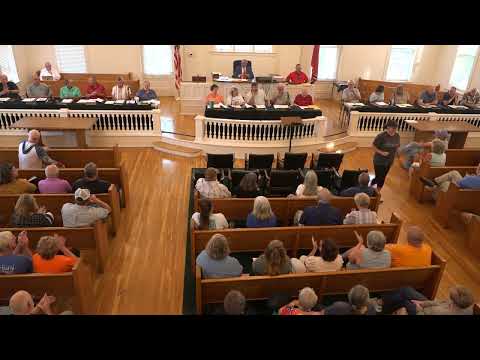
At a recent public meeting, three residents urged local policymakers to look for ways to reduce growing property-tax burdens by attracting new businesses, including sit-down restaurants that could sell alcohol, and by reviewing local tax policy.
The appeal came from a high school English teacher who did not give a name, a resident who identified herself as the spouse of a small-business owner, and Mary Dunbar, a property owner and longtime community participant.
The teacher said attracting restaurants could help broaden the tax base and ease pressure on property owners. "Let's bring in businesses that can bring in revenue, that can generate more revenue here in our community," the teacher said. She added that restaurants often rely substantially on alcohol sales. "One thing I do know about the restaurant business, those restaurants pay their bills with that liquor revenue, not their food revenue," she said. The teacher also invoked examples of past local dining anchors, saying, "If we build it, they will come," and referenced businesses including Chesney's, Rafferty's, Parrot's House and Charlie's Logans as historical examples of commerce clustering.
The spouse of a small-business owner described multiple tax layers on one family's earnings and business assets. "My husband has a small business. He pays taxes on the money he makes, then he pays taxes to pay himself and the business, and then every year he has to pay taxes on his tools and equipment to the county," she said, adding that those combined taxes feel duplicative and asking when increases will stop.
Mary Dunbar, who said she had previously attended meetings as an observer and now owns property in the community, urged officials to consider alternatives to repeated tax increases. "I want to propose that our commission look into some other opportunities other than just raising taxes because we are being nickeled and dimed to death as far as taxes go," Dunbar said. She recommended exploring ways to retain the town's historic character while adding restaurants, shopping and other businesses that draw residents and visitors.
Speakers framed their remarks as public-comment appeals rather than formal policy proposals. The transcript does not record a motion, vote or directive by the governing body in response to these comments, and no specific ordinance, statute or funding mechanism was cited by name during the remarks.
Discussion: Residents expressed that relying on continued property-tax increases is politically and economically fraught and suggested economic development — particularly sit-down restaurants with alcohol sales — as one possible revenue strategy. Concerns voiced included rising insurance and cost-of-living expenses and the cumulative effect of taxes on small-business operations.
Decisions and next steps: The transcript excerpts provided contain only public comments and do not show any formal action, direction to staff, or timeline for policy review.