
District briefed board on federal and state grants under review, outlines program impacts
Get AI-powered insights, summaries, and transcripts
Subscribe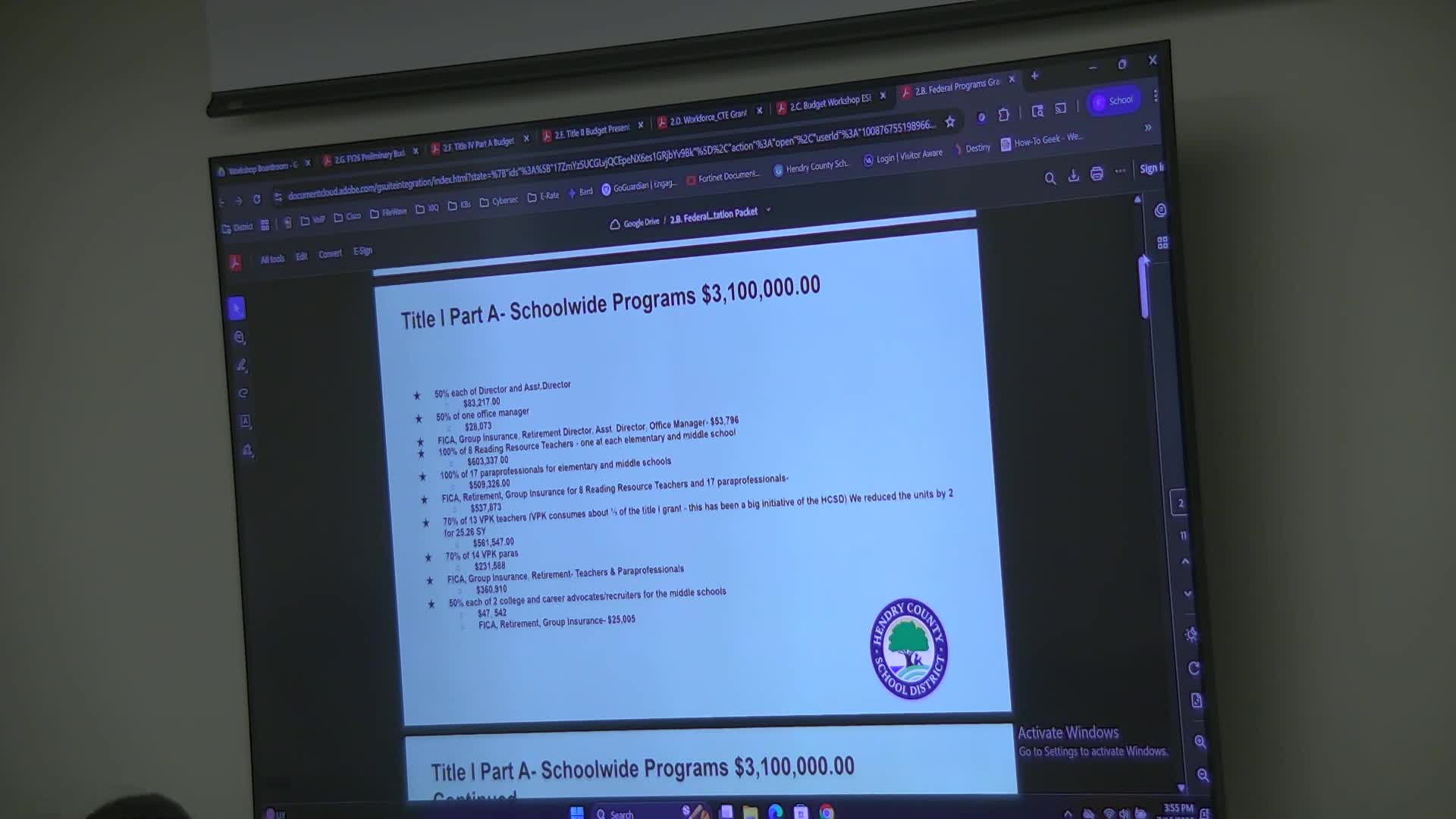
Summary
Administrators walked the board through federal grant portfolios — Title I (including private school equitable share), Title II, Title III, migrant, IDEA/Part B, VPK and others — and described which awards are frozen or reduced and what services/payroll those grants support.
Directors for grants and ESE told the board several federal entitlement and competitive grants are paused or have preliminary reductions and that the district is planning how to adjust services if funding is reduced. Presenters named Title I (including the equitable share that must be set aside for private schools), Title II (professional learning), Title III (ELL and immigrant services), Title I Part C (migrant), IDEA Part B (ESE funding), and several smaller allocations as material to the district budget.
What officials said: Director Miss Rosacker and program leads explained that much of the money flows to salaries: reading/resource teachers, interventionists, ESE paraeducators, migrant recruiters and after‑school tutors were cited as grant payroll lines. Miss Rosacker said one Title I cut she tracked was about $259,000 in a single allocation; presenters cautioned that the number and final outcome of the federal review process were not known and could include reductions or rescission.
IDEA and special education: Miss White (ESE director) described how IDEA Part B funds supplement special education salaries and contracted related services (speech, OT, PT). She explained the state’s matrix funding for higher‑need students (levels 4–5) and said the district successfully hosted a state cost review that produced a one‑time $150,000 state award to address severe behavior costs; she called that amount “a band‑aid on a broken leg” but said the state is making changes to the matrix in response to the district’s data.
Migrant, VPK and ELL programs: Presenters said migrant and H‑2A related funds support recruiters and outreach; Title III supports district ELL staffing and materials; VPK programming was described as a district focus with a high proportion of students served and a reported strong VPK program. The migrant and some other grants were identified as especially likely targets for federal review, per staff comments in the workshop.
Closing and next steps: Directors said they will amend budgets and staffing lines if the federal reviews reduce awards, and stressed the district’s legal obligation to set aside equitable shares for private schools and to comply with grant maintenance‑of‑effort rules. The board was urged to consider legislative outreach to press for matrix funding adjustments for high‑need special education students (Miss White suggested adding the item to the district’s legislative platform).