Get Full Government Meeting Transcripts, Videos, & Alerts Forever!
Get email alerts on the Hb5002 Veto topic
No spam. Unsubscribe anytime.
Committee discusses state housing bill veto, local impacts and possible bipartisan letter
Summary
Members reviewed Gov. Ned Lamont's veto of HB 5002, discussed likely special session outcomes, flagged local concerns including parking rules, fee-shifting and prevailing wage implications, and agreed to draft a bipartisan statement for state legislators.
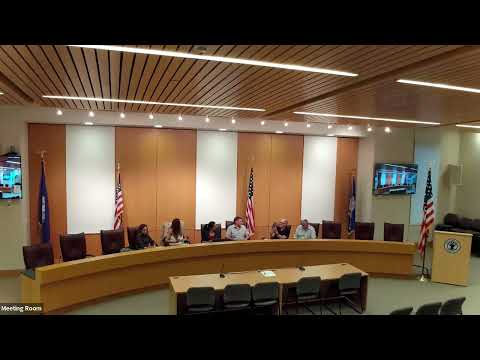
The New Canaan Affordable Housing Committee discussed Governor Ned Lamont’s veto of HB 5002 and the likely statutory and practical implications for the town’s affordable housing plans, and members agreed to draft a bipartisan statement to state legislators outlining local concerns.
Committee members said the governor’s veto will send housing legislation back to the legislature in a special session, and they noted public remarks from the governor emphasizing issues such as proposed parking exemptions for developments under 24 units and the inclusion of a "fair share" requirement. The committee identified several provisions that concern municipalities: a proposed elimination of parking requirements for small developments, fee‑shifting of legal costs to towns, and the bill’s emphasis on rental housing (not homeownership).
Members said Connecticut Council of Municipalities (CCM) and other municipal organizations have communicated opposition to the bill as drafted, and said CCM and regional councils of governments (COGs) are working with state leaders to propose revisions. Committee members named Francis and Sam Gold (RiverCog) as local contacts who have been involved in drafting potential municipal responses.
The committee discussed ways to be proactive. One member suggested drafting a bipartisan letter from the committee that would summarize New Canaan’s accomplishments on housing, outline local concerns about specific provisions in HB 5002 — particularly parking rules, fee‑shifting of legal fees to towns and the bill’s rental focus — and offer alternative approaches, such as reweighting hue points or equalizing incentives for homeownership and senior housing. Members asked to coordinate any draft with Francis before circulating it more broadly.
Committee members also raised separate but related development-cost pressures not addressed by HB 5002, including building‑code changes, material price increases and prevailing‑wage considerations. One member reported a news article and said the Connecticut Department of Labor did not issue a prevailing‑wage determination this year; the committee noted that a prevailing‑wage requirement or a Department of Labor determination that raises labor costs could be a “show stopper” for some projects.
The committee asked two members to work on a draft statement and to circulate it to the full committee by email for review; the group discussed holding a focused August meeting or a special‑meeting Zoom session if a faster response is needed. No formal legislative lobbying action was authorized at the meeting; the committee agreed to prepare a bipartisan, informational statement that can be shared with state legislators.