Get Full Government Meeting Transcripts, Videos, & Alerts Forever!
Get email alerts on the Housing topic
No spam. Unsubscribe anytime.
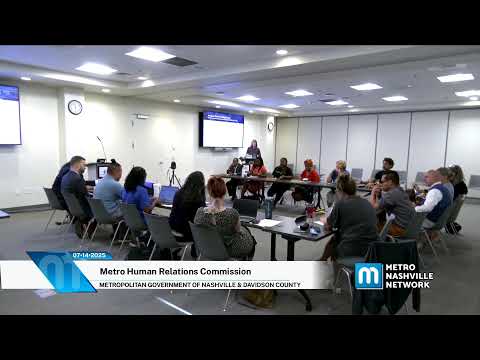
Metro planning presents housing infrastructure study and unified housing strategy to Human Relations Commission
Summary
Metro Planning staff presented the Housing & Infrastructure Study and the Unified Housing Strategy to the Metro Human Relations Commission, proposing phased zoning and building-code changes and estimating a 10-year need of roughly 90,000 new homes.
Metro Planning staff presented the Housing & Infrastructure Study and the Unified Housing Strategy to the Metro Human Relations Commission on a July afternoon, outlining recommended building-code and zoning changes, a public engagement schedule and an infrastructure assessment that planning expects to complete in fall 2025.
The presentation framed the work as a multi-phase effort to increase housing supply and affordability. "As this study has evolved, the project team has started to think about it in four big phases," said Katie Kimesis, Metro Planning staff, summarizing the study's timeline from technical analysis to rezoning and a two-year post-implementation assessment. Travis Miller, also with Metro Planning, described the Unified Housing Strategy as "a call to collective action" and said it is intended to be "a living strategy that will be responsive to market conditions."
The study recommends a mix of short- and medium-term changes to the zoning and building codes. Key technical proposals discussed include changes to the International Building Code that would allow single-stair buildings higher than current limits (the presentation noted a pending IBC adoption process), creation of two new zoning districts called "residential neighborhood" and "residential limited" intended to allow so-called middle-housing types (townhomes, quadplexes, small courtyard apartments), and an "attainable built funds" program to support affordability. Planning described a three-task approach to code changes: (1) building-code and new-district standards, (2) simplification of certain commercial and multifamily districts, and (3) adjustments to single- and two-family districts (including duplex and DADU rules) to improve predictability and compatibility.
Planning staff said earlier analysis and community engagement produced the recommendations. The department reported it has engaged 537 community members to date, hosted workshops and office hours, produced a 90-page initial findings memo in March, and compiled a fuller Unified Housing Strategy document (the presenters said the full UHS exceeds 200 pages). The study team estimated Nashville will need roughly 90,000 new homes in the next 10 years (about 9,000 units per year) and identified a gap of about 20,000 homes for households at or below 60% of area median income, with the greatest shortage for households below 30% AMI. Staff also reported eviction filings are up about 45% versus pre-pandemic levels and peaked at 1,478 filings in February 2024.
Presenters were explicit about legal and program limits. Miller said the UHS will not mandate affordability through zoning and that rent control is not available locally: "We aren't able to mandate in our zoning code affordability or utilize affordability as a deciding factor in zoning changes. We're also not able to impose rent control here in Nashville." Planning said voluntary incentives and locally administered subsidies would be primary tools for producing more income-restricted units.
Commissioners and members of the public who spoke pressed planning for more immediate, concrete actions to address current housing instability. Several speakers — including Commissioner Carmen Rees Foster and Commissioner Johnson — warned the study's multi-year horizon did not solve urgent needs such as thousands of Metro Nashville Public Schools (MNPS) families reported as unhoused. One commissioner cited a figure of about 4,500 MNPS families without stable housing and asked what the city would do tonight to help those families. A college student asked whether planning had specifically engaged students and campus-affiliated communities; staff said they had not held campus-specific sessions but had recorded a Spanish-language virtual workshop and posted summaries and translated materials online.
Public commenters and some commissioners also raised concerns about the structural dynamics that shape housing in Nashville: state preemption on certain zoning topics, the role of short-term rentals, privatization of publicly owned housing assets and whether public land should be used for affordable housing. Planning staff acknowledged those constraints and said one goal of the UHS and the housing-infrastructure work is to coordinate Metro departments and outside partners more effectively and to build underwriting, compliance and asset-management capacity within Metro.
Next steps, as described in the presentation, include publication of draft zoning standards and a public engagement campaign beginning later in the month, planning-commission work sessions, and public hearings before the planning commission and Metro Council if a text amendment is introduced. Planning told the commission the process for enacting the proposed new districts would be a text amendment that would be reviewed by the planning commission and then decided by Metro Council.
Votes at a glance: the commission approved its minutes as presented earlier in the meeting and later moved to adjourn; both procedural actions passed by voice/hand vote without a roll-call tally recorded in the transcript.
Planning staff provided materials and said they will return with more technical detail (Greg Claxton, who had been scheduled to present background research, did not attend because of a family medical emergency). Commissioners asked staff to provide a clearer list of state constraints and to return with more detailed, actionable recommendations the commission could review and, if desired, endorse or comment on formally.