Parents at San Bernardino County meeting allege unsigned IEPs, staffing gaps and student-data access by outside consultant
Loading...
Summary
Multiple speakers at the July 14 San Bernardino County Board of Education meeting urged the board to address alleged unsigned individualized education programs, repeated classroom staffing gaps for special‑education students and possible improper access to student data by an outside communications consultant in Etiwanda School District.
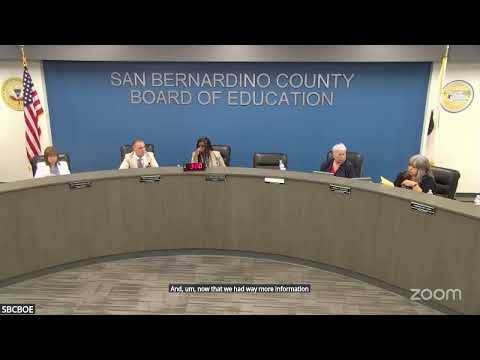
Several parents and a classroom teacher used the public‑comment period at the San Bernardino County Board of Education meeting on July 14 to raise complaints about special‑education services, student privacy and classroom staffing. Speakers said they plan to pursue administrative or legal remedies but did not report any formal action by the board at the meeting. The most direct allegations came from Ron Poloni, who identified himself as a parent. “I still have an IEP for my son that is not signed,” Poloni said, and alleged names were placed on his child’s IEP for people who did not attend the meeting. Poloni said he intends to pursue due process and that his son aged out “last week.” Why it matters: unsigned IEPs and inaccurate team rosters can affect students’ access to special‑education services and procedural hearing rights. The board did not take an action at the meeting; public commenters requested follow‑up from staff. Details and supporting remarks - Poloni said he repeatedly found names of occupational or physical therapists and district staff on his child’s IEPs who “weren’t at the meeting,” and that the IEP remains unsigned. He said this was not an isolated incident and that he will return to future board meetings to press for accountability. (Public comment, July 14.) - Philip Costas, who said he began teaching at Central Elementary in November, described chronic shortfalls in paraeducator coverage in a special‑education classroom and raised three issues: an absent paraeducator for days, lack of hot water in a classroom kitchen, and an administrator’s unilateral revisions to student IEP goals. Costas said his office placed him on paid administrative leave and that he received about $50,000 for 3½ months of paid leave. (Public comment, July 14.) - Des Alvarez said he was speaking to the county superintendent and board about student privacy. Alvarez alleged that Etiwanda School District uses a communications platform administered by a consultant who lives “9 hours away” and who he says has broad access to personally identifiable student information such as messages, bus routes, attendance and contact data without parent notification or consent. Alvarez urged the superintendent to enforce FERPA requirements. (Public comment, July 14.) What the board and staff said Board members declined to discuss these items during the meeting beyond brief clarifying questions to the speakers, citing the Brown Act’s limitation on board deliberations during public comment. Staff did not make any immediate commitments to specific investigations during the session. Next steps and what is unclear Speakers said they will pursue due‑process hearings or further investigation. The board did not vote or direct staff to open a specific investigation on the record during the meeting. The comments raised three distinct issues (IEP documentation accuracy, classroom staffing and outside access to student data) that fall under different legal and administrative authorities; the transcript includes requests to follow up but does not show staff findings or corrective actions.