Get Full Government Meeting Transcripts, Videos, & Alerts Forever!
Get email alerts on the Waste Recycling topic
No spam. Unsubscribe anytime.
Wasatch Front Waste District defends 33% rate jump, outlines cost cuts and service changes
Summary
District representatives told Murray council the $6.50 monthly increase (from $19.50 to $26) implemented in January reflects rising costs and detailed steps being taken to lower operating expenses, improve recycling quality and test routing technologies.
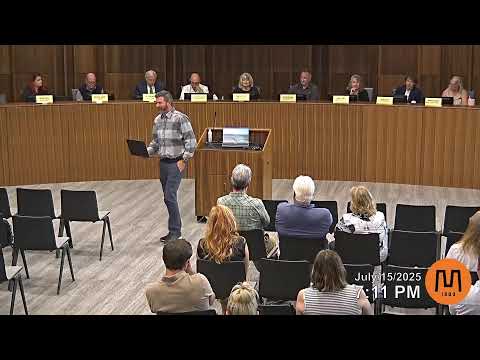
MURRAY, Utah — Wasatch Front Waste & Recycling District representatives told the Murray City Council on July 15 that a $6.50 per household monthly rate increase implemented in January reflects longer-term cost pressures and that the district plans additional operational changes to restrain future increases. "We did have to implement a $6.50 per home per month fee increase starting January," said Pam Roberts, a district representative, during a briefing on collection, recycling and program costs.
The increase — which the district describes as a 33 percent rise that appears on a quarterly bill as $78 — followed several years of smaller adjustments and a period when the district absorbed rising costs. Roberts said the district experienced a roughly 40 percent increase in costs over recent years and that the board authorized the recent changes and further study of billing options.
Why it matters: residential customers sometimes mistake the quarterly invoice for a monthly charge, while the district says the increase pays for services beyond curbside collection, including container repair and replacement, an in-house customer service team, leaf-bag and seasonal-container programs, discounted trailer rental and landfill vouchers.
District actions and planned changes - Fee change implemented: January 2025; district moved from $19.50 to $26 per month (billed $78 quarterly). Roberts told the council the board also gave direction to evaluate monthly billing for 2026 and to encourage e‑billing to reduce printing and mailing costs. - Cost-saving steps cited: modifications to the leaf-bag program, verifying so-called "go-backs" with dashcam footage (the district said about 46 percent of customer go-back claims are attributable to resident timing or improper placement), a personnel reduction (three positions plus one retiring supervisor not filled), and a vehicle procurement decision to buy diesel trucks instead of compressed natural gas (CNG) models to save on acquisition cost. - Truck procurement: Roberts said the board chose diesel after a year-and-a-half evaluation and expects a roughly $400,000 purchase-cost saving compared with CNG; the district will track resale values of older CNG trucks. - Service and routing improvements: James Kelsey, sustainability coordinator for the district, said staff are testing routing technologies intended to smooth pickup windows and reduce fuel and wear-and-tear. Kelsey described pilot work on route audits and driver reporting to improve recycling quality and reduce truck go-backs.
Recycling performance and contamination Kelsey reported a 31 percent diversion rate for 2024 across the district and a 23 percent diversion rate for January–May 2025 after correcting transfer-station tonnage allocations that had inflated the earlier number. "Landfill diversion is basically just all the waste that's collected — how much of that are we diverting from the landfill into sustainable options," Kelsey said.
He said Murray comprises about 3.32 percent of district customers (2,865 residences) and provided 2024 and year-to-date tonnage totals for refuse, recycling, green waste and curbside glass. Kelsey also described a steady improvement in clean-recycle rate for Murray from about 73.6 percent in 2021 to 77.4 percent in 2024; the district goal is 80 percent.
Discussion versus formal decisions The presentation was informational; the council did not vote on district policy. Roberts said the district board has already approved the January fee change and has authorized staff to explore monthly billing and other cost-cutting measures. Some council members asked about predictable pickup windows to reduce go-back requests; district staff said fixed pickup times would be logistically challenging but that routing technology tests are planned.
What remains unresolved Staff and council members discussed the timing variability of pickups and the district's plan to pursue routing technology; no council action was requested or taken. The district requested that city staff and council help get the word out about billing changes and program options.
Ending note Roberts and Kelsey encouraged continued cooperation with Murray and offered to send education materials to council members who volunteered to help with outreach.