Get Full Government Meeting Transcripts, Videos, & Alerts Forever!
Get email alerts on the Cpace Program topic
No spam. Unsubscribe anytime.
Purchasing committee takes CPACE RFQs under advisement, seeks third‑party administrator review
Summary
Committee accepted two RFQs for a third‑party administrator to run a Tennessee CPACE program for commercial properties; staff and a consultant said the county carries no financial liability and the administrator would handle applications, billing and collections.
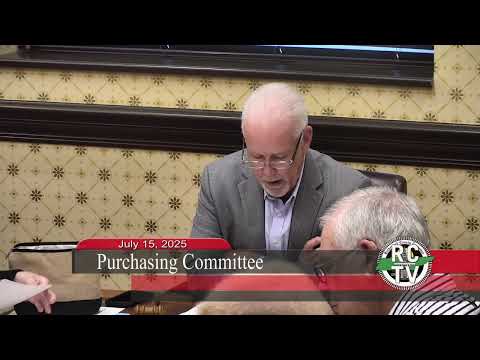
The Rutherford County Purchasing Committee on July 15 agreed to take under advisement two RFQs seeking a third-party administrator to help implement a Commercial Property Assessed Clean Energy (CPACE) program in the county. County staff said the CPACE enabling legislation (passed in 2021 at the state level) allows commercial property owners to finance energy-efficiency and environmental improvements with a special assessment on the property; the county would act as an administrator or can hire a third-party administrator to operate the program. Staff emphasized the county would not put up its own money — liabilities attach to the property and private lenders — and said administrators are typically paid by adding a 1% administrative fee to the PACE loan, capped at $50,000. Chris Jones, representing Tennessee PACE program administration, explained the administrator’s role: assembling a program manual, managing the application packet, confirming an energy audit and appraisal, coordinating with private PACE lenders and facilitating signature pages that finalize a CPACE special assessment. Jones said PACE lenders typically handle billing/collection and foreclosure processes in the event of default, reducing county administrative burden. Committee members asked whether each project would come back to the county commission for approval. Jones said the county can set program rules; widely used practice is for the administrator to handle standardized approvals and only bring unusual or discretionary cases to the commission. Staff said they will work with county attorneys and the mayor’s office to determine the formal path and public‑hearing requirements; CPACE requires a public hearing if the county adopts the special-assessment program. Two RFQs were submitted: Tennessee PACE and Harris Shelton. The committee voted to take the RFQs under advisement and asked staff to return with a recommendation and suggested due diligence including reference checks with jurisdictions that have implemented CPACE (for example, the city of Franklin and Metro Nashville were cited as examples). The committee recorded a roll-call vote approving the motion.