Get Full Government Meeting Transcripts, Videos, & Alerts Forever!
Get email alerts on the Water And Sewer Rate Adjustments topic
No spam. Unsubscribe anytime.
Seal Beach reopens public hearing on proposed water and sewer rate hikes; continues to Aug. 11
Summary
Seal Beach city leaders reopened and continued a contentious public hearing on proposed multi-year water and sewer rate increases, voting to continue the hearing to Aug. 11, 2025, and extending the deadline for written protests to that date.
Seal Beach city leaders reopened and continued a contentious public hearing on proposed multi-year water and sewer rate increases, voting to continue the hearing to Aug. 11, 2025, and extending the deadline for written protests to that date.
The hearing drew more than a dozen residents who questioned the scope, timing and transparency of the proposed program and urged the council to delay a final vote until Councilmember Wong could participate. After public comment and discussion, the council approved a motion to reopen and continue the public hearing to Aug. 11 by a 3-1 vote.
Why it matters: The city’s staff and outside consultant said Seal Beach must raise utility revenues to pay for an estimated $44 million in water capital projects and $19 million in sewer projects over five years under the staff’s primary scenario. Staff warned that delaying adoption would reduce available funding by an estimated $300,000 per month and could put the wastewater enterprise out of compliance with bond covenants.
Director of Public Works Iris Lee opened the staff presentation by tracing the multi-year process that led to the hearing and by summarizing staff’s recommended options. “Every moment that we don't take action could lead to potentially more emergencies, failures, costs, and more importantly, risk to your health and safety,” Lee said, describing an option that funds a larger set of capital projects and a smaller option that reduces near-term CIP spending but carries greater long‑term risk.
Steve Gagnon, a consultant with Raftelis Financial Consultants, described the financial model underpinning the proposals and gave specific rate examples used in staff materials. Under the primary scenario presented by Raftelis (scenario 1), residential volumetric water rates would rise from about $3.77 per 100 cubic feet to $5.20 in the first step and reach about $7.41 by the end of the five‑year study. Fixed charges for a typical 5/8‑inch meter were shown rising from about $52 to roughly $70 in the near term and to about $100 by the study’s end. Raftelis summarized combined water and sewer impacts as roughly a $60 increase per bimonthly billing cycle for a typical residential account (about $30 per month) in year one and roughly $362 on an annual basis in the first year, growing to about $1,000 annually by the end of the five‑year plan.
The staff presentation listed major capital items and funding assumptions: approximately $44 million of water CIP under scenario 1 (including a $4.5 million Lampson well project and a projected mix of market debt, state revolving fund loans and an Orange County Water District loan) and about $19 million in sewer CIP (including a nearly $3 million Sunset Aquatic Park pump station upgrade and multiple sewer mainline lining and replacement projects). Gagnon said the water scenario assumed roughly $25 million in market debt, $9.5 million in SRF loans and about $4.4 million tied to OCWD financing.
Staff also summarized three written objections submitted under Assembly Bill 2257 and responded in writing in the meeting packet. Lee and Raftelis said the objections generally raised equity and transparency concerns but did not, in staff and counsel’s view, identify legal defects under Proposition 218 or AB 2257 that would bar the rate process. “Your water and sewer revenues stay in the water and sewer fund,” Lee said, noting the city is audited annually on fund use.
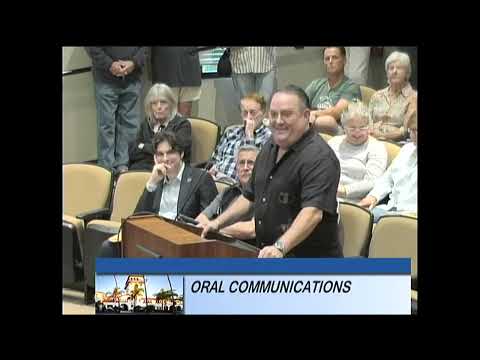
Public comment was lengthy and critical. Speakers, including longtime residents and representatives of Leisure World and College Park neighborhoods, asked for more transparency and a clearer, public tracking mechanism for projects and expenditures. Several residents urged postponement so the full five‑member council could vote; Councilmember Wong provided a written request to defer and asked the council to wait until he could participate. Multiple commenters urged the city to pursue refinancing options, state or federal grant opportunities, and local revenue alternatives (for example, expanded paid parking on Main Street) before imposing steep rate increases on residents, many of whom called out the impact on fixed‑income households.
At the close of public comment the city clerk reported 297 written protests for parcels receiving water service (out of 5,587 parcels) and 293 written protests for parcels receiving sewer service (out of 5,050 parcels). Under the rules explained at the hearing, a majority protest would require written protests from a majority (50% plus one) of parcels; the totals reported at the hearing did not approach that threshold.
Council action: The council considered several motions. An initial motion to postpone the final vote until the July 28 meeting resulted in a tie and therefore failed. A later motion to reopen and continue the public hearing to Aug. 11 carried 3‑1. The council recorded that reopening would extend the written‑protest period through the new hearing date and that the public would have another opportunity to speak at the Aug. 11 meeting.
Votes at a glance: Motion to approve the agenda — carried, 4‑0. Consent calendar approval — carried, 4‑0. Motion to approve an $18,000 amendment for professional services for Persomus (to be reimbursed by project proponent) — carried, 4‑0. Motion to reopen and continue the water and sewer rate public hearing to Aug. 11, 2025 — carried, 3‑1.
What’s next: The public hearing will be reopened at the council’s Aug. 11, 2025 meeting; written protests will be accepted and counted through the close of that hearing. Staff said it will continue outreach and post supplemental information on the city’s website and social channels. If, after the continued hearing, a majority protest is not sustained, staff recommended the council adopt resolutions responding to timely written objections (AB 2257), establishing the proposed water rates and establishing the proposed sewer rates, with an effective date staff proposed of Aug. 1, 2025 — actions that remain pending until the continued hearing and any subsequent council action.
Selected quotes
“Every moment that we don't take action could lead to potentially more emergencies, failures, costs, and more importantly, risk to your health and safety.” — Iris Lee, Director of Public Works
“We're proposing 34% increases in the first year, but remember, the rates went down 25% in 2021.” — Steve Gagnon, Raftelis Financial Consultants (summarizing rate history and the first‑year proposal)
“Delaying the adoption of these rates amounts to an estimated $300,000 of lost revenue per month.” — Iris Lee, Director of Public Works
“I cannot support the further increases to the water and sewer rates until the city demonstrates prior approved funds have been responsibly and transparently invested.” — Catherine Showalter, College Park East resident
Ending note: The council’s Aug. 11 session will reopen the record and allow additional written protests and public comment. The city manager and staff said they will expand outreach, post materials online and provide updates on proposed capital projects if the council proceeds after the continued hearing.