Get Full Government Meeting Transcripts, Videos, & Alerts Forever!
Get email alerts on the Traffic Safety And Enforcement topic
No spam. Unsubscribe anytime.
Jersey City councilors press administration for targeted traffic enforcement, speed-limit study and state backing for automated enforcement
Summary
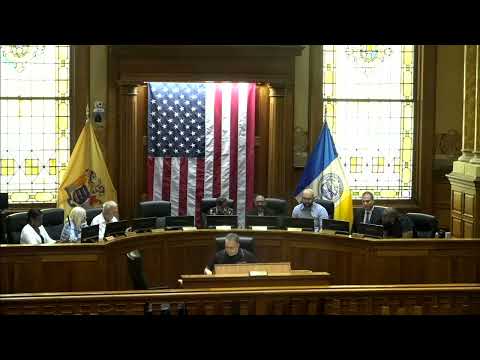
At a July caucus meeting, council members debated a nonbinding resolution urging targeted traffic-enforcement assignments and infrastructure investments, asked for a faster citywide speed-limit study, and endorsed asking the state to allow automated traffic enforcement in large cities.
At a July caucus meeting, members of the Jersey City Municipal Council discussed a nonbinding resolution asking the administration to deploy ‘‘substantial additional resources’’ for traffic enforcement and street-safety infrastructure and debated how enforcement would be carried out and funded. The council also heard updates on a citywide speed-limit study and discussed a separate council resolution urging the state to authorize automated traffic enforcement in large cities.
The resolution text read in caucus calls on the administration to assign officers specifically to traffic enforcement and to advance street-safety engineering projects. The sponsor described the measure as ‘‘nonbinding, but it is calling…we are calling upon you to deploy officers specifically to traffic enforcement so that they're out every day, doing that.’’ The caucus discussion highlighted two central concerns: whether the police department has enough sworn personnel to staff a dedicated traffic unit, and whether infrastructure projects will be funded through capital or the operating budget.
Why it matters: Council members said traffic crashes and speeding are a recurring public-safety concern. Several council members linked enforcement gaps to staffing shortages in the police department and urged transparent accounting of where funds would come from to implement both people-based and capital interventions.
Details from the meeting
Staff and department directors described the current implementation pathway. Barkha Patel, director of infrastructure, said the mayor has prioritized a citywide speed-limit reduction and that the city’s on-call traffic engineer is conducting the study. ‘‘We've already started the process, and we expect to complete it in the next couple of months through the city's on call traffic engineer,’’ Patel told the council. She said the study will determine roadway classifications and appropriate posted speeds, and that any ordinance changing speed limits would follow submission of that study to the New Jersey Department of Transportation. Patel also said the study will include county and state-owned roadways within the city, but the county and state would still need to legislate changes on their roads.
Jennifer Wong, director of traffic engineering, summarized several traffic-related ordinances and grant applications that staff plan to bring before the council, including proposed parking restrictions near St. Joseph’s School, several intersections where right turns on red would be prohibited, a NJDOT bikeways grant application for a shared-use path on Phillips Street, and a municipal-aid application to repave Palisades Avenue.
Funding and enforcement limits
City budget staff told council members capital appropriations can fund hard infrastructure — signage, engineering, curb extensions, and street trees — but that hiring additional sworn officers would require amendments to the operating budget or other recurring funding. The administration said capital funds would not be used to pay wages: ‘‘If you're looking to hire additional police or staff, then we'd have to shift budget money around from somewhere else or raise taxes,’’ one budget official said.
Council members pressed the police staffing issue. One member said officers have complained about low pay and staffing levels and warned that ‘‘you can't patrol a whole North District the size of the North District with 80 cops.’’ The council asked the administration for a head count by division from the police department to show how many officers are assigned to each unit so it can evaluate redeploying personnel or refocusing resources.
Delivery worker safety and compliance
The caucus also received an update on a local law requiring delivery platforms to distribute safety training and reflective gear to couriers. Patel said two major delivery companies, Uber and DoorDash, have added the safety test to their apps and distributed vests, and that the city’s code-enforcement staff can begin enforcement where the apps have complied. ‘‘They did an event where they handed out the vests … so now moving forward, we are in a position where we can start enforcing,’’ Patel said.
Automated enforcement resolution
Separately, the council is scheduled to consider a resolution endorsing a change in state law to allow automated traffic enforcement in ‘‘cities of the first class’’ (municipalities with populations of 150,000 or more). City staff said the resolution would ask the county and the state Vision Zero advisory committee to consider allowing cameras and automated enforcement on high-crash corridors, bus lanes and other targeted locations; the measure is intended to supplement, not replace, police enforcement. The resolution is intended as a legislative ask to the state; it would not create automated cameras on its own.
Next steps
Council members asked staff to supply: (1) a division-level head count for the police department; (2) the capital reappropriation details that will show what line items would be reallocated to traffic engineering projects; and (3) the completed speed-limit study and any NJDOT responses once available. The nonbinding traffic-enforcement resolution and the legislative-endorsement resolution for automated enforcement were presented in caucus for discussion and are expected to appear on the council meeting agenda for formal consideration.
The discussion combined short-term enforcement questions and longer-term engineering work; council members said both are needed but differ in funding and implementation pathways.