Get Full Government Meeting Transcripts, Videos, & Alerts Forever!
Get email alerts on the Zoning Strategy Housing Plan topic
No spam. Unsubscribe anytime.
Residents urge council to finish strategic housing plan before changing R-1 and R-2 zoning
Summary
Several Evanston residents, architects and housing experts urged the City Council to complete a strategic housing plan and market studies before approving broad changes to R-1 and R-2 zoning that would allow two- to four-unit buildings across the city.
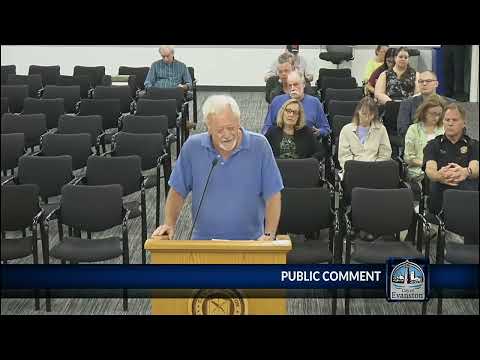
Dozens of residents and housing experts used the public-comment period to urge the Evanston City Council not to move forward with major zoning changes until the city completes a data-driven strategic housing plan and market analysis.
Joe Caprilli, a Sixth Ward resident who said he and a group of Evanston planning and design professionals sent a memo to the mayor and council, asked that the council retain an independent zoning consultant through an RFP and that the consultant work run concurrently with the comprehensive plan and strategic housing plan so the work can "merge at the end." Steve Test and David Galloway, representing Design Evanston, supported the same sequencing and recommended a consultant with strong experience in form-based zoning and community engagement.
Several other residents warned that upzoning R-1 and R-2 areas to allow two- to four-unit buildings could undermine single-family neighborhoods, fail to produce affordable housing and accelerate demolition of modest homes. Mary Rasinski, speaking on behalf of developer Alf McConnell, said the city should commission a market study to determine who occupies existing affordable units and whether growth would subsidize residents from other municipalities. Sheila Sullivan said only larger apartment buildings can typically achieve economies of scale for true affordable units and urged that affordable housing be located near transit, shopping and services.
Andrea Liss and Paula Twilling similarly argued that the city's single-family character is a founding feature and cautioned against unplanned population growth; they said the Illinois Human Rights Act prohibits housing discrimination but that zoning changes also have fiscal and community-service implications. Alf McConnell and Paul Breslin urged careful financial vetting of specific projects, including requests for tax abatements and the developer's sources-and-uses statements.
Multiple commenters asked that the strategic housing plan be completed first, and requested that any RFPs for zoning consultants be explicit about objectives, public engagement and how zoning changes would connect to the comprehensive plan. Council members and staff acknowledged the request; several speakers explicitly asked that the zoning consultant RFP be added to a future council agenda for formal discussion.
No formal council action on zoning changes occurred during this meeting; the public-comment period was offered as the final opportunity for feedback on the draft consolidated plan and public participation plan being submitted to HUD.