Get Full Government Meeting Transcripts, Videos, & Alerts Forever!
Get email alerts on the Transportation Utility Fee topic
No spam. Unsubscribe anytime.
Copperas Cove council backs public outreach on plan to create transportation utility; staff to model $10 SFE and $2,500 cap
Summary
City staff presented a draft ordinance, public-engagement plan and revenue models for a transportation utility fee aimed at improving a deteriorating street network; council gave direction to start outreach and asked staff to model a $10 single-family equivalent (SFE) rate and a $2,500 monthly cap for large nonresidential users.
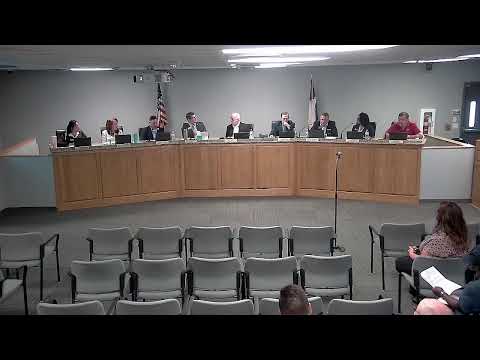
City staff presented a package of outreach materials, a draft ordinance and revenue models on July 15 as the City of Copperas Cove continued work on a proposed transportation utility fee to fund street maintenance and reconstruction.
Public works director Scott Osborne outlined a public-engagement schedule that would begin in August with a multi‑platform media push, seven town halls (four residential, three commercial), online materials and targeted meetings with civic groups. Osborne said the city maintains about 168 centerline miles of streets and that the pavement condition index (PCI) for the system has fallen since the 2021–22 assessment; staff estimated the citywide average at about 58 PCI compared with 61 previously and cited a past analysis that found roughly $52.4 million in needed repairs. "One of the first questions we'll hear is how much is this gonna cost me on my bill," Osborne said, explaining the need to settle an initial residential rate before public outreach.
Why it matters: The city is seeking a sustainable revenue stream to move from reactive patching toward proactive maintenance and reconstruction. Osborne and consultant work referenced a 10‑year target PCI average of 70 that, in the earlier study, would have required about $4.6 million per year in dedicated funding.
What staff proposed and what council directed: Staff proposed starting outreach in August, returning to council for ordinance adoption on Oct. 7, 2025, and making the fee effective Jan. 1, 2026, with an initial round of projects scoped by June 1, 2026. The Transportation Work Group recommended an initial single‑family equivalent (SFE) charge of $10 per month; staff’s revenue model estimated that an SFE set at $10 would produce roughly $4.0 million gross annually (about $3.6 million after nonrecoverable items in the current model). Staff also presented that each $1 of SFE produces about $406,000 in gross annual revenue.
Council provided preliminary direction to proceed with the public engagement materials and schedule and asked staff to model specific rate scenarios. Members signaled acceptance of using $10 as the working SFE figure for the town‑hall materials and asked staff and the city’s consultant (NewGen Strategies & Solutions) to model the effect of a $2,500 monthly cap for the largest nonresidential accounts and to pro rata that cap across the nonresidential bands. Staff said the cap modeling and revised banding (including a proposal to add midrange bands between existing ranges) would be produced for council review prior to adoption.
Nonresidential design and cap discussion: Staff showed the fee methodology used to convert trip generation into SFE for nonresidential parcels and explained that large trip generators (examples cited in the analysis included the grocery store H‑E‑B) could face substantial monthly charges at higher SFE rates. To balance competing objectives — funding streets while keeping the city commercially competitive — the Transportation Work Group recommended a $2,500 monthly cap; council asked staff to quantify how that cap would change revenue and to return with pro forma scenarios.
Communications products: Staff previewed a one‑page flyer and a short draft video to support outreach, and said online materials (including a QR code) would link to the pavement assessment, feasibility analysis and FAQs. The flyer and materials will note that city facilities are the only entities exempted in the draft ordinance (unless a noncity entity leases a city facility).
Open questions and clarifications: Staff used a 90% assumed collection rate in initial models and said they would verify that assumption; staff also emphasized that the quarter‑cent sales tax currently funds about $1.3 million per year and is insufficient to meet the city’s PCI goals alone. Osborne emphasized that numbers in presentation materials are draft and would be updated after council direction and public input.
Next steps: Staff will (1) refine the revenue models with NewGen (including additional nonresidential bands and cap scenarios), (2) implement the August outreach schedule if council concurs with materials, and (3) return to council for ordinance and fee schedule adoption on Oct. 7, 2025, per the draft timeline. Council did not adopt an ordinance at the July 15 workshop — it provided direction to finalize outreach and modeling ahead of formal consideration.
Ending: Staff said the outreach and modeling would be revised based on council direction and public input and that a formal adoption decision would occur at a future council meeting.