Get Full Government Meeting Transcripts, Videos, & Alerts Forever!
Get email alerts on the Energy Efficiency topic
No spam. Unsubscribe anytime.
Idaho Power pitches FlexPeak and school-energy cohort programs to Middleton district
Summary
Idaho Power representatives described two programs — a summer FlexPeak demand-response payment and a year-round school-energy cohort with retrofit incentives — and answered questions about implementation, controls, and likely incentives for the Middleton School District.
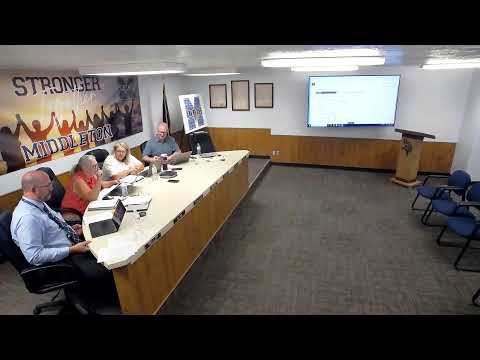
Idaho Power representatives presented two energy programs to the Middleton School District board on the utility’s role in cutting peak demand and funding efficiency upgrades at school facilities. Megan Mitchell, a QEAP energy advisor, and Chris (identified as a customer incentive senior engineer) outlined a FlexPeak demand-response option and a longer-term cohort program that pairs coaching and targeted incentives with facility evaluations.
The presentation matters because both programs offer recurring payments or capital incentives that could lower the district’s electric bills and help defer capital spending on HVAC and lighting upgrades. District staff asked practical questions about controls, scheduling and how incentives would be paid.
The FlexPeak program pays customers to reduce electrical load on the grid during hot summer peak days (season: June 15–Sept. 15). Chris said the district could nominate a load-reduction amount (for example, 25 kW across multiple schools or 75 kW at the high school) and be paid after performance is measured at the end of the season: "If you hit between 75% and 120% of what you've nominated, then you get the full amount." Megan and Chris explained participation is voluntary and schools may opt out of any single event.
On controls, Chris said not every building has centralized HVAC controls but the high school does; Idaho Power offers incentives to add centralized controls where they are absent. He gave typical installed-control cost ranges of about $2.50 to $4 per square foot and described payback expectations: manual participation can be immediate, while capital upgrades to centralized control systems could have paybacks under 10 years in some cases.
The cohort program pairs schools in a multi-year group with ongoing monthly coaching, meter-history analysis and a computer model of facility energy use. Idaho Power said participants receive training (HVAC, lighting, controls), month-to-month peer learning and an incentive paid after measured savings. Chris said some districts in southern Idaho have reduced energy use about 30% after joining the cohort over multiple years. For a district of Middleton’s size, Idaho Power estimated incentives in the range of roughly $8,000 to $10,000 per year, but emphasized that bill savings are the primary benefit.
District administrators raised operational questions: how to maintain events (for example, preserve heat/cooling in occupied gym events while reducing load elsewhere), whether the high school’s primary meter affects rates, and whether the district must meet nominated reductions to qualify. Idaho Power replied that the utility would coordinate event calls and work with each school’s principals and maintenance supervisor to manage occupied spaces and adjust nominations if necessary.
The presenters offered to follow up with district staff to provide a meter-by-meter analysis for each school, and to provide incentives and technical support if the district elects to install central controls or proceed with capital upgrades. "If you guys do sign up, ... you can play with it. You can give and take," Chris said about the program parameters.
District next steps discussed included staff follow-up to get meter and rate data for the high school, evaluating which facilities to start with (the presenters recommended beginning with the high school), and considering the cohort program’s longer-term payback and curriculum/teacher engagement opportunities.
The board did not take formal action during this presentation beyond asking staff to follow up for more detailed cost and meter information.