Get Full Government Meeting Transcripts, Videos, & Alerts Forever!
Get email alerts on the Health And Human Services Budget topic
No spam. Unsubscribe anytime.
Pine County health director warns state, federal changes will increase local costs
Summary
Pine County Health and Human Services director Becky Fassen told the County Board that mandated programs — especially children's services, out‑of‑home placements and SNAP administration — are underfunded and that pending state and federal rule changes could increase local levy pressure in 2027–2029.
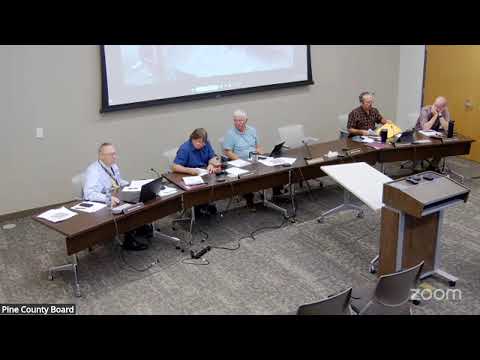
Becky Fassen, director of Pine County Health and Human Services, told the Pine County Board on a presentation that the department relies on a mix of non‑levy and levy funds and that several mandated services are underfunded and likely to increase county costs over the next three years.
Fassen said non‑levy funding (federal, state, grants and reimbursements) makes up the largest share of the HHS budget but that the tax levy still pays for core, unreimbursed obligations such as out‑of‑home placements, county burial costs and administrative portions of required services.
Fassen outlined the department’s three main program areas — social services, income maintenance and public health — and said social services consumes the largest share of the budget and the majority of county levy dollars. She told the board that out‑of‑home placements can be costly — “about $1,500 to $2,000 a day” — and that some adults who no longer meet a hospital’s level of care also remain in expensive placements when a suitable alternative cannot be found. She warned the board that a state initiative she called MACPA (to take effect Jan. 1, 2027) and other changes would add workload and likely local costs.
Fassen said SNAP administration changes expected at the federal level will reduce federal administrative reimbursement from roughly 50% to about 25%, shifting costs to state and local governments. Citing Association of Minnesota Counties estimates, she said Pine County might expect a 4.2–4.4% levy impact from SNAP changes alone. She also said Minnesota’s payment error rate for SNAP was 8.98% for fiscal 2024, a metric that could trigger additional costs for the state and counties. Fassen warned that Medicaid/medical assistance rule changes due through 2029 — including more frequent address and eligibility checks — will increase administrative burdens even if benefit dollars are reduced.
On specific items funded by the levy, Fassen told commissioners that county burial expense is an example of an uncompensated statutory requirement and that Pine County handles “over 20” county burials in a typical year with no dedicated state reimbursement. She said children’s services and child protection work generate only modest third‑party revenue — she cited roughly $150,000 in case‑management revenue for three children’s mental‑health staff last year and about $95,000 in child‑protection revenue — leaving the county to cover significant costs.
Fassen said public health represents a small slice of the levy and receives about 90% of its funding from non‑levy sources; nevertheless, the levy covers the community health services administrator position and 100% of the rent for the public health division. She told the board the department is constantly seeking reimbursements, grants and efficiencies to limit reliance on the levy and credited staff for those efforts.
Chair and several commissioners asked clarifying questions about staff levels, the trainee model used by other departments and whether state administration of programs would reduce county burden. Fassen answered that Minnesota is one of a minority of states that delegates many program administration duties to counties, which complicates comparisons and funding responsibility.
Fassen concluded by urging the board to watch state and federal developments closely because the combined legislative and regulatory changes anticipated in 2027–2029 will almost certainly increase local costs and complicate the 2026–2028 budget outlook.
The board took no formal action during the presentation but scheduled further budget work during upcoming meetings.